
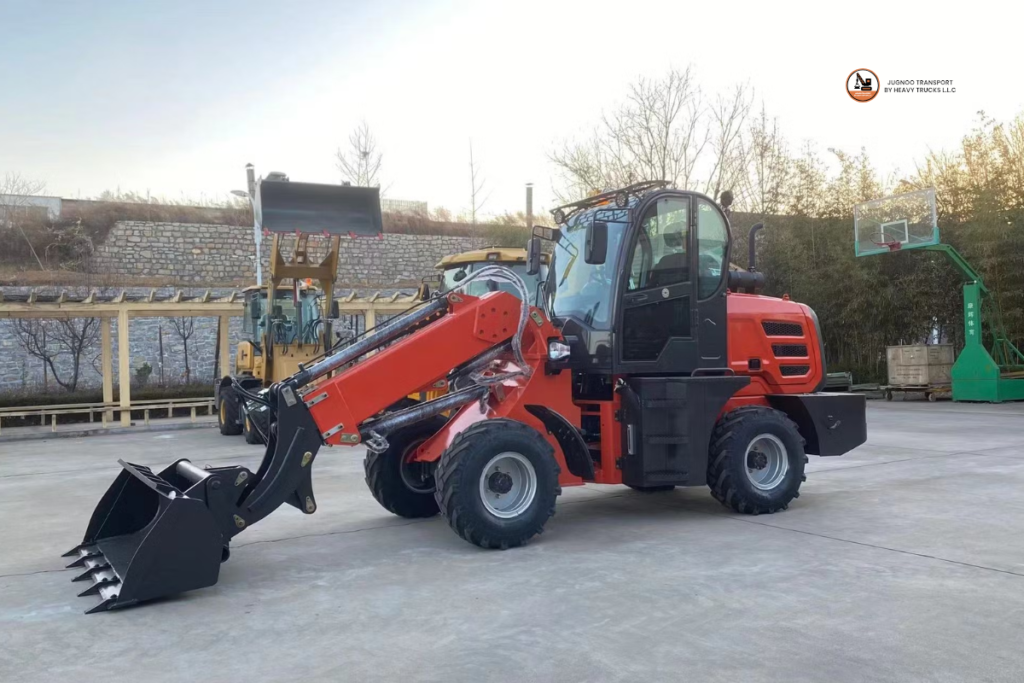
Boom loader capacity explains the maximum load a boom loader can safely lift, helping you choose the right machine for construction and lifting jobs.
In the fast-paced world of construction, logistics, and material handling, the boom loader stands as a workhorse of incredible versatility. From lifting heavy piping to placing delicate materials at height, its ability to reach and lift is indispensable. However, with great power comes great responsibility—specifically, the responsibility to understand its limits. Misunderstanding a boom loader lifting capacity isn’t just a minor error; it’s a critical safety and financial risk.
At Jugnoo Transport, we’ve built our reputation not just on providing reliable machinery and transport solutions, but on championing a culture of safety and knowledge. We believe that an informed operator is a safe, efficient, and productive one. This comprehensive guide will break down the sometimes-confusing concepts of boom loader maximum load and load limits into simple, actionable knowledge.
What Do We Mean by Capacity?
Let’s start with the basics. When we talk about a machine’s capacity, we’re answering a simple question: How much can it safely lift? But with a boom loader, the answer is never a single number. Think of it like this: you can likely hold a heavy bucket close to your body. But if you try to hold that same bucket with your arm fully stretched out, it suddenly feels much heavier and is harder to control.
A boom loader works on the same principle of leverage. Its boom loader load capacity is a dynamic value that changes based on two primary factors:
- The Load’s Distance from the Machine: This is the most critical factor. The further the load is from the machine’s center (the further the boom is extended), the less weight it can safely lift. This distance is often called the radius or reach.
- The Configuration of the Machine: Is the boom fully retracted or fully extended? Is the machine on outriggers (stabilizer legs) or on its tires? Is it on a slope? Each configuration changes the stability and, therefore, the safe boom loader lifting capacity.
This is why shouting a single number like It can lift 10,000 lbs! is dangerously misleading. The real question is: At what reach, and in what setup, can it lift 10,000 lbs?
The Holy Grail: Understanding the Load Chart
Every reputable boom loader comes with a non-negotiable bible: the Load Chart. This isn’t a suggestion; it’s the law, defined by the manufacturer after rigorous engineering testing. Ignoring the load chart is the fastest route to catastrophe.
The load chart is a table or series of graphs, usually located in the operator’s cabin or manual. It translates the machine’s configuration into clear, numerical limits. Here’s how to read it:
- The Axes: Typically, one axis (vertical) shows capacity in pounds or kilograms. The other axis (horizontal) shows the load’s radius or the boom’s angle.
- The Configuration: There will be separate charts or columns for different setups. For example:
- On Outriggers, Fully Extended: This gives you the strongest, most stable base and usually the highest capacities.
- On Tires (Rubber): The machine is less stable, so the boom loader maximum load values are significantly reduced at any given reach.
- Boom Angle vs. Load Radius: Some charts use the angle of the boom, while others use the horizontal distance from the machine’s pivot point to the center of the load.
Example in Practice: The chart might say that with outriggers fully deployed and a load radius of 10 feet, the boom loader load capacity is 5,000 lbs. But at a 20-foot radius with the same setup, the capacity might drop to 1,500 lbs. This dramatic decrease is why understanding the chart is non-negotiable.
The Cardinal Sin: Overloading the Boom
Overloading the boom is not a simple oops. It is a conscious decision to operate outside the engineered safety limits. The consequences are severe and often immediate:
- Structural Failure: The boom, which is a complex structure of steel and hydraulics, can bend, crack, or snap catastrophically. This is not a repairable ding; it’s a total, often irrecoverable loss of the machine.
- Tip-Over Hazard: This is the most common and dangerous result. When the load’s weight and momentum exceed the machine’s stability, the entire unit can tip over. This endangers the operator, nearby workers, and causes immense damage to the machine and property.
- Hydraulic System Damage: The pumps, hoses, and cylinders are designed for specific pressures. Overloading creates excessive pressure, leading to blown seals, ruptured hoses, and pump failure.
- Loss of Control: An overloaded machine becomes sluggish and unresponsive. The operator loses the fine control needed for precise placement, leading to swinging loads and collisions.
At Jugnoo Transport, we stress that the cost of waiting for the right machine or making an additional lift is always, always less than the cost of an accident caused by overloading.
The Foundation of Safety: Stable Ground Matters
You can have the most precise load chart reading in the world, but if your machine is set up on unstable ground, that chart is worthless. Operating on unstable ground is like building a house on sand—eventually, it will give way.
- Ground Pressure: Boom loaders concentrate immense weight on their outrigger pads or tires. Soft ground like mud, sand, freshly backfilled soil, or asphalt on a hot day cannot support this pressure.
- The Silent Shift: The ground may seem stable initially, but as weight is applied and the machine shifts slightly, it can cause compaction, sinking, or a sudden collapse. This shifts the machine’s center of gravity and can lead to a tip-over.
- Best Practices: Always use outrigger pads (or floats) to distribute the load over a larger area. Conduct a site assessment. If you must work on questionable surfaces, use engineered mats or cribbing to create a stable platform. Never assume the ground is firm enough.
Our team at Jugnoo Transport always includes a site safety consideration in our planning. When we deliver equipment, we’re thinking not just about the machine, but about the environment it will work in.
Seeing is Believing: Managing Blind Spots
A boom loader operator has a challenging job that requires constant spatial awareness. Poor visibility and blind spots are ever-present risks, not signs of poor operator skill.
- The Blind Spot Map: Every machine has them—areas the operator cannot see from the cab. Common blind spots are directly behind the machine, close to the front tires, and often along a significant portion of the boom’s length, especially when raised.
- The Dynamic Load: The load itself can block vision. When lifting a large object like a generator or a HVAC unit, the operator’s forward view can be completely obstructed.
- Mitigating the Risk: This is where technology and procedure come together.
- Use a Spotter: A trained signal person is invaluable. They act as the operator’s eyes on the ground, using clear, standardized hand signals (or radios) to guide movement.
- Technology Aids: Camera systems are becoming more common and affordable, providing real-time views of critical blind spots.
- The 360 Walk-Around: Before starting any lift, the operator should do a full circle walk around the machine and the load area to identify people, obstacles, and hazards.
- Go Slow: In areas of limited visibility, slow, deliberate movements are key.
Calculating the Real Weight: It’s More Than a Guess
One of the biggest mistakes is underestimating the weight of a load. It looks light is not a measurement. Always:
- Check Shipping Manifests or Data Plates: Most industrial materials and equipment have a stated weight.
- Use a Scale: For unknown objects, use a certified scale. Guessing is gambling.
- Remember the Hidden Weight: The weight of slings, rigging hardware, pallets, and the attachment on the boom (like a fork carriage) all count against the boom loader maximum load. This is called the deduct weight and must be subtracted from the chart’s capacity to find what you can actually lift.
The Human Factor: Training and Mindset
Ultimately, the machine is only as safe as the person operating it. Comprehensive training that goes beyond basic controls to include:
- Load Chart Literacy: Making chart reading second nature.
- Rigging Fundamentals: Understanding how sling angles affect the load force on the boom.
- Stability Principles: Knowing why the machine becomes less stable as the load moves.
- A Culture of Stop Work Authority: Empowering every person on site to speak up if they see an unsafe act, like overloading the boom or operating on unstable ground.
Jugnoo Transport is committed to this holistic view of safety. We don’t just lease or transport equipment; we are a resource. Our partners know they can call us with questions about a machine’s capabilities or best practices for a tricky job site.
The Ripple Effect of Getting It Right
Understanding and respecting boom loader load capacity isn’t just about avoiding disaster. It has powerful positive effects:
- Increased Productivity: Properly planned lifts are smoother, faster, and prevent costly downtime from breakdowns or accidents.
- Lower Costs: You avoid catastrophic repair bills, insurance premium hikes, and regulatory fines.
- Enhanced Reputation: A company known for safe operations attracts better clients and skilled workers.
- Peace of Mind: Everyone goes home safe at the end of the day. This is the ultimate goal.
Conclusion: Partner with Knowledge
The world of boom loaders is one of incredible power and potential. Unlocking that potential safely hinges on one thing: a deep, unwavering respect for the machine’s limits. From diligently consulting the load chart to rigorously avoiding overloading the boom, from insisting on stable ground to proactively managing poor visibility and blind spots, every step is a link in the chain of safety.
At Jugnoo Transport, we see ourselves as more than a service provider. We are your partners in operational excellence. We ensure the equipment we provide is meticulously maintained and suited for the task, and we stand ready to support your team with the knowledge needed to use it to its full—and safe—potential.
Don’t let a lack of information be the weak link on your next project. Whether you’re a seasoned operator or a project manager planning a critical lift, take the time to review, calculate, and communicate. And remember, when in doubt, the experts at Jugnoo Transport are just a call away. Let’s build, lift, and advance—safely and smartly, together.Disclaimer: This blog post is for informational purposes only and should not replace official manufacturer documentation, operator manuals, or certified training. Always adhere to your machine’s specific load chart, company safety policies, and all applicable local, state, and federal regulations (like OSHA).