
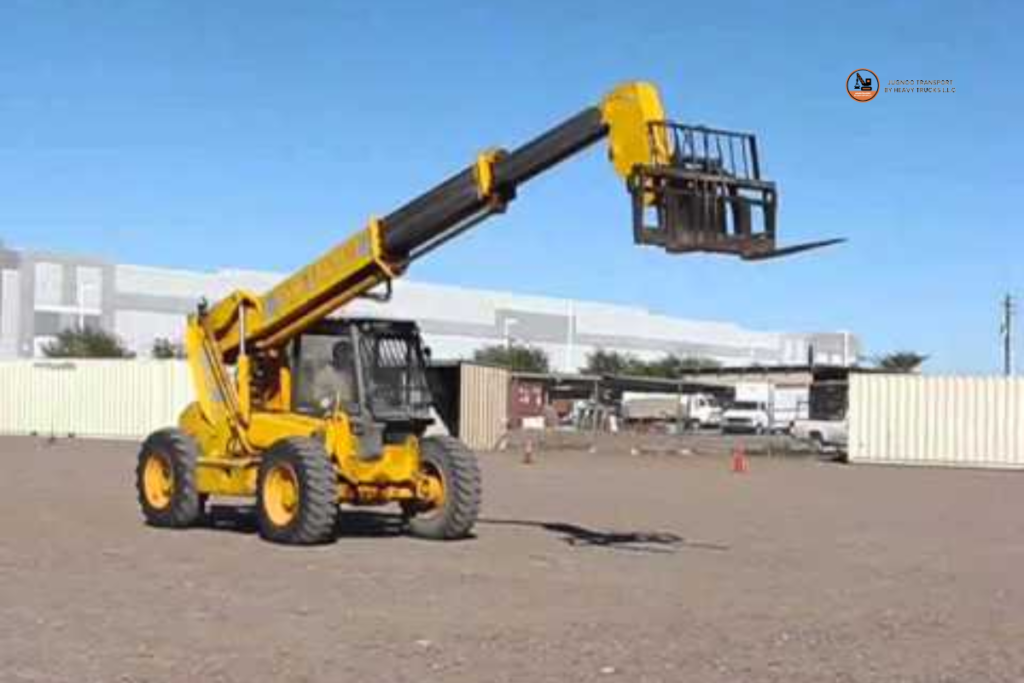
JCB Telescopic Handler for heavy lifting, construction, and material handling. Explore features, capacity, and rental options today.
In the dynamic world of construction, agriculture, logistics, and industry, few machines offer the sheer versatility and brute strength of a telescopic handler. Often called a telehandler, this powerhouse is the Swiss Army knife of worksites, seamlessly reaching heights, lifting heavy loads, and maneuvering in tight spaces. And when it comes to telehandlers, one name stands above the rest for innovation, durability, and performance: JCB.
At Jugnoo Transport, we don’t just move machinery; we partner with businesses to build the infrastructure of tomorrow. We’ve seen firsthand how the right equipment transforms projects, boosts efficiency, and ensures safety. That’s why we have a profound respect for JCB’s engineering excellence. In this comprehensive guide, we’ll dive deep into the world of the JCB telescopic handler, exploring its standout JCB telehandler features, broad range of uses, detailed JCB telescopic handler specs, and crucial safety practices every operator must know.
What is a JCB Telescopic Handler?
Before we get into the specifics, let’s start with the basics. A telescopic handler is essentially a hybrid machine. It combines the rough-terrain capability of a forklift with the extending boom of a crane. The telescopic part refers to the boom that extends and retracts, much like a telescope, allowing the machine to place loads forward and at height without having to move the entire vehicle.
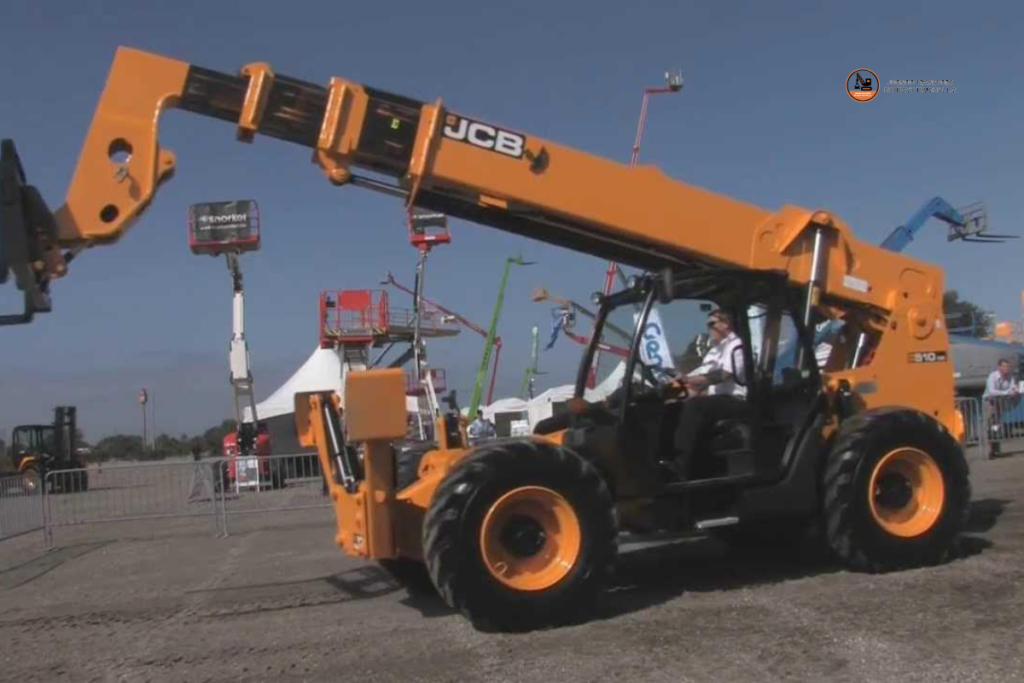
JCB, a global leader in construction equipment, has perfected this design. Their telehandlers are renowned for their power, precision, and operator comfort. Whether you’re lifting pallets of blocks to the third story of a building, feeding bales in a vast farmyard, or handling materials in a busy warehouse yard, a JCB telehandler is built to handle the challenge.
Standout JCB Telehandler Features: Why They Lead the Pack
JCB doesn’t just make telehandlers; they reinvent them with thoughtful innovations that address real-world site problems. Here are some of the key JCB telehandler features that set them apart:
- The Signature JCB TorqueLock Brake:
Imagine being on a steep slope with a heavy load lifted high. The fear of the machine drifting is real. JCB’s TorqueLock brake automatically engages when the operator leaves the seat or the engine is turned off, holding the machine securely in place on slopes up to 25%. This isn’t just a feature; it’s a fundamental safety guardian.
- Powerful and Efficient Engines:
JCB telehandlers are powered by advanced EcoMAX engines. These engines are designed to deliver massive torque at low revolutions per minute (RPM), which means more power for lifting and loading while using less fuel. This efficiency translates directly to lower operating costs and a smaller environmental footprint.
- Exceptional Stability and Strength:
The chassis and structure of a JCB telehandler are engineered for immense strength. A wide wheelbase and a well-balanced design provide exceptional stability, which is the foundation of safe lifting. This robust construction means the machine can withstand the rigors of daily use on demanding sites.
4. Superb Visibility and Control
One of the most critical aspects of safe operation is what the operator can see. JCB designs its cabs with up to 360-degree visibility, featuring large windows and slim pillars. This dramatically reduces poor visibility and blind spots. Inside, the intuitive controls are laid out for ease of use, reducing operator fatigue and increasing precision.
- Smooth and Responsive Hydraulics:
The hydraulics system is the heart of the telehandler’s movement. JCB’s systems are renowned for their smooth, responsive control. This allows for pinpoint accuracy when placing loads, whether you’re slotting a beam into place or gently lowering a pallet into a confined area.
6. Quick-Attach Versatility
A bare fork is just the beginning. JCB telehandlers feature a quick-attach mechanism that allows you to switch between a multitude of attachments in minutes—from buckets and jibs to truss booms and sweepers. This transforms one machine into a multi-tool, maximizing your investment.
- Operator Comfort and Connectivity:
A comfortable operator is a productive and safe operator. JCB cabs are spacious, air-conditioned, and equipped with suspension seats. Modern models also include JCB LiveLink, a telematics system that allows fleet managers (and you) to monitor the machine’s location, fuel usage, service alerts, and operational data remotely.
The Many Uses of a JCB Telehandler: A Machine for Every Sector
The true value of a JCB telehandler lies in its incredible versatility. Its ability to adapt to different attachments and work environments makes it indispensable across numerous industries.
In Construction:
This is the classic home of the telehandler. On building sites, they are used for:
- Material Handling: Lifting and placing pallets of bricks, blocks, roofing materials, and drywall.
- Feeding Masons: Elevating loads directly to bricklayers and stonemasons at height.
- Site Setup: Moving scaffolding, formwork, and temporary structures.
- Placement Work: Using a jib attachment to position steel beams, trusses, or HVAC units.
In Agriculture:
Farmers were among the first to see the potential of telehandlers.
- Hay and Feed Handling: Moving and stacking large round or square bales with a bale spike.
- Barn Work: Cleaning out stables and barns using a bucket attachment.
- Loading: Quickly loading produce, feed, or materials onto trucks and trailers.
- General Maintenance: Handling supplies and performing repairs around the farmstead.
In Industry and Warehousing:
For large-scale logistics and manufacturing:
- Yard Management: Organizing and retrieving materials from storage yards.
- Plant Maintenance: Assisting with the installation or repair of heavy machinery inside factories.
- Loading Bays: Servicing loading docks where traditional forklifts can’t reach.
In Infrastructure and Utilities:
- Roadwork: Placing signage, barriers, and pipes.
- Event Setup: Lifting stages, lighting rigs, and materials for concerts and events.
At Jugnoo Transport, we’ve delivered JCB telehandlers to every one of these sectors. Understanding the specific needs of each industry allows us to ensure the right machine gets to the right job, safely and on time.
Understanding JCB Telescopic Handler Specs: Choosing the Right Model
When selecting a telehandler, the JCB telescopic handler specs are your roadmap to finding the perfect match for your workload. Here’s a breakdown of the key specifications and what they mean:
Maximum Lift Capacity:
This is the most talked-about spec. It tells you the maximum weight the telehandler can lift. Crucially, this capacity is rated at a specific load center (usually 500mm or 1 meter from the fork face). Remember, capacity decreases as the boom extends and the load moves further from the machine.
Maximum Lift Height:
This is how high the fork tips can go when the boom is fully extended vertically. JCB offers models with lift heights from around 6 meters (20 feet) for compact models to over 20 meters (66 feet) for high-reach giants.
Dimensions and Maneuverability:
- Overall Width: Determines if it can fit through gates or in narrow alleyways.
- Turning Radius: A smaller radius means better maneuverability in tight spaces.
- Tire Options: Choices include pneumatic (for rough ground) or solid (for sites with debris).
Here’s a simplified glance at a few popular JCB models:
- JCB 512-56: A brilliant all-rounder. Roughly 3.5-ton lift capacity, 5.6-meter lift height. Perfect for farms, small construction sites, and general industry.
- JCB 531-70: A major step up. Around 3-ton capacity but with a massive 7-meter lift height and excellent forward reach. Ideal for larger building projects.
- JCB 540-170: A high-capacity beast. Can lift 4 tons to a height of 17 meters. Built for the biggest challenges in industrial and heavy construction.
At Jugnoo Transport, our experience allows us to help clients navigate these specs and understand which JCB telescopic handler specs truly matter for their specific application.
The Non-Negotiables: Safety First with Your Telehandler
A telehandler is a powerful tool, and with great power comes great responsibility. Ignoring safety protocols is not just risky; it can be catastrophic. Let’s address some critical safety hazards, including those you mentioned, and how JCB’s design helps mitigate them.
1. The Peril of Overloading the Boom and Ignoring the Load Chart
This is arguably the most dangerous mistake an operator can make. Every telehandler has a load chart—a complex table or diagram inside the cab that shows exactly how much weight can be lifted at every combination of boom angle, extension, and height.
- The Danger: Overloading the boom drastically changes the machine’s center of gravity. It can cause the telehandler to tip forward suddenly, often with zero warning. This isn’t a slow tilt; it’s a violent, catastrophic failure.
- The JCB Advantage: JCB machines are built with stability in mind, but the load chart is law. Modern JCB cabs display load moment indicators (LMIs) that give operators real-time warnings if they approach an unsafe condition.
- The Rule: Never, ever guess the weight of a load. Weigh it. Always, without exception, consult the load chart before any lift. Ignoring the load chart is inviting disaster.
2. The Risk of Operating on Unstable Ground
The ground must support the immense weight and pressure of the machine, especially when it’s under load.
- The Danger: Operating on unstable ground—like soft soil, backfill, near trenches, or on slopes beyond the machine’s rating—can cause the ground to collapse or the machine to slide or tip.
- The JCB Advantage: Features like four-wheel drive and differential locks provide excellent traction, but they don’t change ground physics. The TorqueLock brake helps secure the machine on approved slopes.
- The Rule: Always assess the ground conditions. Use solid, level ground pads or mats when working on soft surfaces. Never work too close to excavations. The ground is your foundation; if it fails, everything fails.
3. Navigating Poor Visibility and Blind Spots
Despite excellent design, all large machines have areas the operator cannot see.
- The Danger: Poor visibility and blind spots around the rear, sides, and directly in front of the carriage can lead to striking objects, vehicles, or—tragically—people. This is especially risky when reversing or maneuvering in a busy area.
- The JCB Advantage: JCB’s cab design, with its large glass areas and slimmer pillars, actively minimizes these blind spots. Many models now offer optional camera systems that provide a bird’s-eye view of the machine’s surroundings.
- The Rule: Operators must use their mirrors, take the time to look, and always use a trained signal person or spotter when moving in areas where people are working or visibility is compromised. Never rely solely on mirrors or assume a path is clear.
Additional Critical Safety Practices:
- Seatbelt On, Cab Door Closed: The cab is a Roll-Over Protective Structure (ROPS). It only works as a lifesaving shell if the operator is secured inside with the seatbelt and the door is closed.
- Travel with the Load Low: Never travel with the boom high and extended. Carry the load as low as possible, close to the ground, with the boom slightly tilted back.
- Respect the Rated Capacity: The lift capacity isn’t a target; it’s a maximum limit under perfect conditions. Leave a safety margin.
- Get Formal Training: Operating a telehandler requires specific, certified training. It is not a skill learned “on the job.
Safety isn’t a single feature; it’s a culture. It’s the combination of a well-designed machine from JCB and a well-trained, vigilant operator following every protocol. At Jugnoo Transport, we champion this culture. We believe delivering a machine also means advocating for the knowledge to use it safely and productively.
Why Partner with Jugnoo Transport for Your JCB Needs?
You now understand the capabilities of a JCB telescopic handler. But acquiring and managing such a significant piece of equipment involves more than just writing a check. That’s where Jugnoo Transport comes in as your strategic partner.
We are more than a transport company; we are your logistics and equipment support specialists. Here’s how we add value:
- Expert Handling and Delivery: We understand the delicate nature of heavy machinery. We handle the permits, the route planning, and the careful loading/unloading.
- Industry Insight: With years of experience serving construction, agriculture, and industry, we speak your language. We can connect you with the right dealers, discuss the JCB telescopic handler specs that matter for your projects, and provide logistical support that understands site constraints.
- Nationwide Reach: Wherever your project is, Jugnoo Transport has the network to get your equipment there. From urban high-rise sites to remote rural farms, we bridge the distance.
- A Commitment to Your Success: We see ourselves as a link in your supply chain. Your efficiency contributes to our reputation.
Conclusion: The JCB Telehandler – An Investment in Capability
The JCB telescopic handler is a testament to intelligent engineering. Its blend of powerful JCB telehandler features, backed by clear and impressive JCB telescopic handler specs, creates a machine that is fundamentally versatile and robust. It solves material handling problems across a spectrum of industries, lifting not just loads, but also productivity and safety standards when used correctly.
However, its power demands respect. Adhering to safety principles—never overloading the boom, constantly referencing the load chart, avoiding operating on unstable ground, and diligently managing poor visibility and blind spots—is what allows this incredible machine to build a legacy of achievement, not accidents.
If you’re considering adding a JCB telehandler to your fleet, or need to move one to your next big project, let’s talk. At Jugnoo Transport, we’re here to ensure that the machine that can do it all gets to the place where it can do it for you.
Contact Jugnoo Transport today. Let’s move your business forward.