
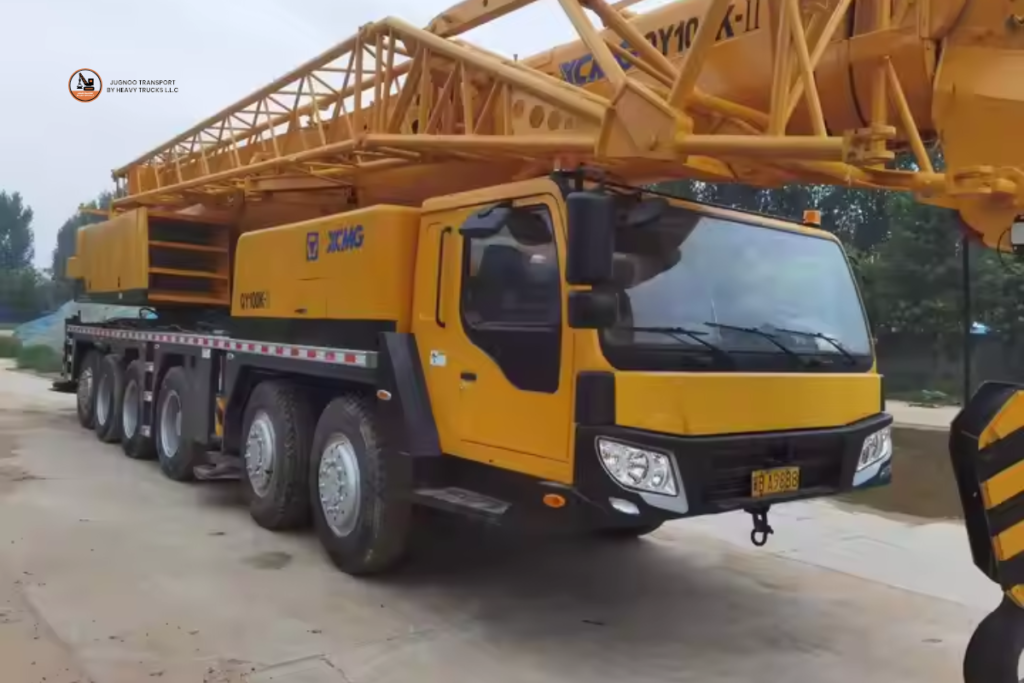
Rent a 100 Ton Mobile Crane for heavy lifting projects. Ideal for construction, industrial jobs, and safe on-site operations.
In the world of heavy lifting and complex construction, few machines command as much respect and awe as the mobile crane. These engineering marvels are the backbone of modern infrastructure, capable of moving the seemingly immovable. Among them, the 100 ton mobile crane stands as a true workhorse—a versatile giant that strikes the perfect balance between formidable power and practical mobility. Whether you’re a project manager planning a major build, an engineer designing a lift, or simply someone fascinated by big machinery, understanding this incredible piece of equipment is key. In this deep dive, we’ll explore everything from detailed 100 ton crane specifications to its vital 100 ton crane lifting capacity, and why choosing the right partner, like Jugnoo Transport, makes all the difference.
What Exactly is a 100 Ton Mobile Crane?
Let’s start simply. A 100 ton mobile crane is a self-propelled lifting machine designed to hoist and move loads weighing up to 100 metric tons (or approximately 220,000 pounds). This combination of sheer strength and mobility makes it one of the most requested pieces of equipment for a vast array of projects.
Think of it as the Swiss Army knife of the heavy lifting world. It’s not the absolute largest crane out there, but its capabilities cover a massive range of common—and not-so-common—industrial tasks. From placing giant HVAC units on rooftops to setting steel beams for a new bridge, the 100 ton crane capacity is often the sweet spot for major commercial and industrial work.
Breaking Down the Key 100 Ton Crane Specifications
You can’t talk about capabilities without understanding the specs. The 100 ton crane specifications are a blueprint of its power and limits. While models vary by manufacturer (like Liebherr, Grove, Tadano, or Demag), they all share common critical components.
The Carrier: The Machine’s Foundation
This is the truck-like part that allows the crane to travel. It’s a heavy-duty chassis with a powerful engine (often 400-500 horsepower) and multiple axles—typically 3 to 5—to distribute the immense weight. Many modern carriers have all-wheel steering, allowing for remarkable maneuverability on tight job sites.
The Boom: The Reaching Arm
The boom is the crane’s lifting arm. Most 100-ton cranes feature a telescopic boom, meaning it extends and retracts in sections, much like a telescope. A typical model might have a main boom that extends from around 40 feet to over 150 feet.
The Counterweights: The Balancing Act
These are often removable and stackable. For a 100-ton crane, the counterweight package can itself weigh 20 to 40 tons. Proper configuration is non-negotiable for safe operation.
The Outriggers: Creating a Stable Base
These are the hydraulic legs that extend horizontally from the sides of the carrier and then vertically down to the ground. This transforms the vehicle from a mobile truck into a stationary lifting platform.
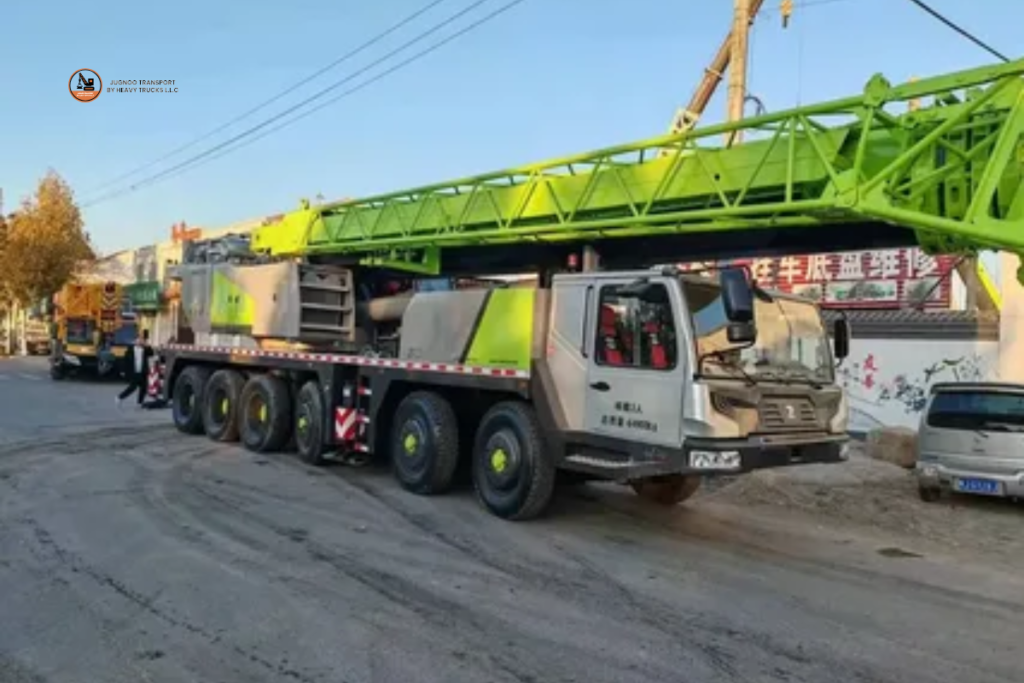
The Operator’s Cab: The Command Center
Perched high above the carrier, the cab gives the operator a 360-degree view. It’s filled with sophisticated controls, load-moment indicators (computer systems that prevent unsafe lifts), and charts that are the bible for every operation.
Understanding the 100 Ton Crane Lifting Capacity
This is the most critical concept, and it’s often misunderstood. The 100 ton crane lifting capacity does not mean it can lift 100 tons at any distance or with any configuration.
Capacity is a dynamic equation affected by four key factors:
- Radius: This is the horizontal distance from the center of the crane’s rotation to the center of the load. The greater the radius, the less the crane can lift. A 100-ton crane might lift its full capacity at a very short radius (e.g., 10 feet), but only 10 tons at a 100-foot radius.
- Boom Length: As the boom extends further out, capacity decreases. A longer boom creates more leverage against the crane.
- Boom Angle: A steeper boom angle (closer to vertical) is stronger than a shallow one.
- Crane Configuration: The setup—including outrigger extension, counterweight amount, and boom attachment—directly dictates the capacity.
This is why the Load Chart is sacred. It’s a complex table specific to that crane’s configuration that tells the operator exactly what can be lifted at every possible boom length and radius. Ignoring the Load Chart is one of the most dangerous and reckless mistakes possible, leading directly to catastrophic failure.
The Many Uses of a 100 Ton Mobile Crane
The versatility of this crane size is its superpower. Here’s where you’ll commonly see them in action:
- Commercial Construction: Erecting structural steel for office buildings, placing precast concrete panels, and lifting heavy mechanical units (chillers, generators, air handlers) into place.
- Industrial Projects: Installing equipment inside factories, refineries, and power plants. This includes reactors, turbines, and massive tanks.
- Infrastructure & Bridge Work: Placing girders, concrete segments, and large formwork for bridge construction and repairs.
- Wind Energy: While larger cranes handle the turbine itself, a 100-ton crane is perfect for handling nacelle components, transformers, and during maintenance operations.
- Logistics and Manufacturing: Unloading heavy machinery from ships and trains, and moving large components within manufacturing facilities.
- Event Staging: Lifting and positioning massive trusses, sound systems, and screens for concerts and major events.
Critical Safety Considerations: Respecting the Giant
A crane of this size is an incredible tool, but it demands immense respect. Safety isn’t just a guideline; it’s the absolute foundation of every successful lift. Here are key hazards that professional firms like Jugnoo Transport are trained to rigorously avoid:
- Overloading the Boom: This is the direct result of ignoring the load chart. Every component of a crane is engineered for specific stress limits. Overloading the boom creates catastrophic metal fatigue, which can lead to a sudden and deadly collapse. There are no shortcuts; the chart is the law.
- Operating on Unstable Ground: The mightiest crane is only as stable as the ground beneath it. Soft soil, backfilled trenches, or unseen underground voids can give way. Outriggers must be set on solid, level ground using proper mats or cribbing to distribute the pressure. Operating on unstable ground is an invitation for the entire crane to tip over, a risk no professional should ever take.
- Poor Visibility and Blind Spots: The operator’s view is not perfect. Poor visibility and blind spots are constant challenges, especially when lifting at long radii or over obstacles. This is why a qualified signal person (or spotter) is essential. They become the operator’s eyes on the ground, using standardized hand signals or radios to guide the lift safely. Lifting in high winds, fog, or at night amplifies these risks and requires even stricter protocols.
Other vital safety practices include maintaining proper clearance from power lines, ensuring all rigging (slings, shackles) is inspected and rated for the load, and conducting thorough daily and pre-lift inspections of the crane itself.
Why Your Choice of Partner Matters: The Jugnoo Transport Difference
Renting or hiring a 100-ton mobile crane isn’t just about getting a machine to your site. It’s about acquiring a complete lifting solution—one built on expertise, safety, and reliability. This is where the value of an experienced firm shines through.
At Jugnoo Transport, we don’t just provide a crane; we provide peace of mind. We understand that the intricate 100 ton crane specifications and the nuanced 100 ton crane lifting capacity are more than just numbers—they are the blueprint for a safe, efficient, and successful project.
- Expert Consultation and Planning: Before the crane even rolls onto your site, our certified professionals work with your team. We analyze lift plans, review site conditions, and help configure the crane to maximize its 100 ton crane capacity for your specific needs. We ask the what-ifs so you don’t have to.
- We rigorously address challenges like poor visibility and blind spots with trained signal crews and technology. Our equipment undergoes stringent maintenance and inspection schedules, ensuring mechanical integrity for every lift.
- Operational Excellence: We manage the logistics—permits, transportation, on-site setup, and execution. We understand that your project is on a schedule, and our goal is to deliver a seamless lifting operation that keeps your timeline on track.
When you choose Jugnoo Transport, you’re choosing a partner that respects the power of the machine as much as the responsibility that comes with it. We ensure that the mighty 100-ton mobile crane becomes a reliable, efficient, and safe extension of your project team.
Conclusion: The Right Tool, The Right Team
The 100-ton mobile crane is a testament to human ingenuity, a machine that turns monumental tasks into manageable ones. Its detailed 100 ton crane specifications and carefully calculated 100 ton crane lifting capacity make it a pillar of modern industry.
By understanding its capabilities, rigorously adhering to safety principles—never overloading the boom, avoiding operating on unstable ground, and mitigating poor visibility and blind spots—you ensure that every lift is a step forward, not a setback.
For your next project that demands strength, reach, and intelligence, look to the 100-ton mobile crane. Choose a partner that brings more than just equipment to the site; choose one that brings confidence. Choose Jugnoo Transport.
Let’s lift your next project, together. Safely, efficiently, and successfully.