
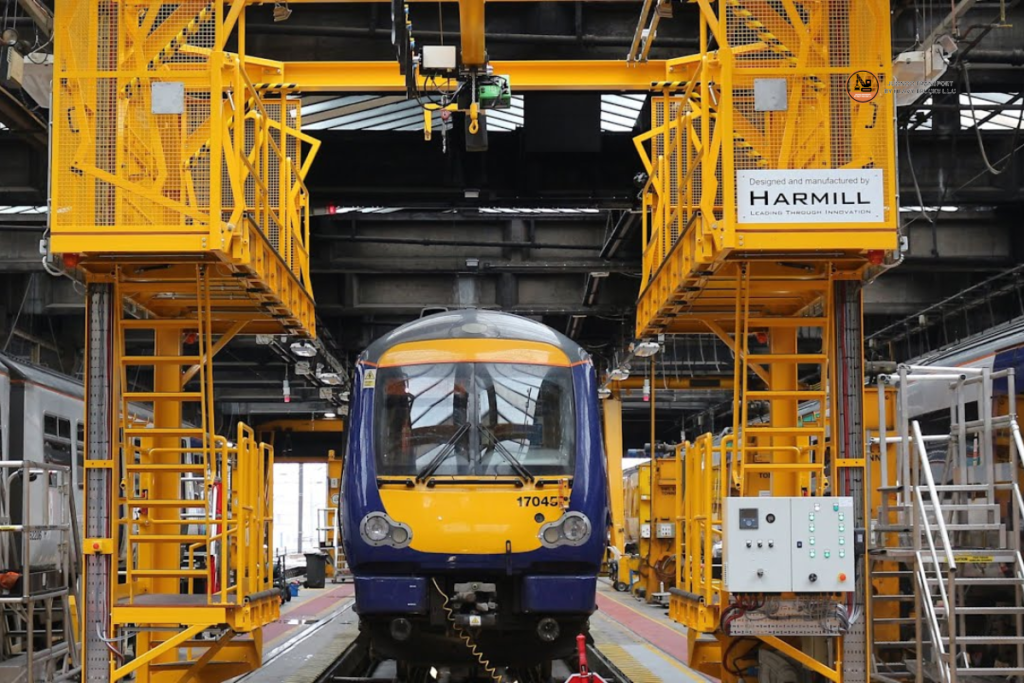
Roof Access Platform solutions for safe and easy rooftop access. Discover durable roof access platform systems for maintenance, construction, and industrial use.
For anyone involved in building maintenance, the roof is often the most overlooked part of the structure—until something goes wrong. Whether it’s servicing an HVAC unit, inspecting solar panels, or repairing weather damage, getting your team and their equipment up high safely is the first and most critical challenge.
At Jugnoo Transport, we understand that logistics don’t stop at ground level. We specialize in moving the heavy equipment that makes these high-altitude jobs possible. In this post, we’ll explore the importance of safe roof access, the technology that makes it possible, and the common pitfalls that turn routine maintenance into a disaster.
The Foundation of Safety: Understanding Roof Access
When we talk about safe working conditions at height, the conversation usually starts with harnesses and guardrails. But before you even clip in, you need to actually get to the work area. This is where a proper roof access platform system comes into play.
A roof access platform system is essentially a designated pathway or work area that provides a stable, secure surface for personnel. These systems aren’t just for getting onto the roof; they are for moving around once you are up there. Modern rooftops are cluttered with ductwork, pipes, and mechanical units. Without a structured path, workers are forced to step over obstacles, walk on fragile roofing materials, or balance on slippery slopes.
For facility managers and safety officers, investing in these systems is about risk management. A high-quality system reduces the likelihood of slips, trips, and falls—which account for a significant percentage of workplace injuries. Whether it’s a temporary setup for a one-time repair or a permanent installation for ongoing maintenance, these platforms ensure that the first step onto the roof isn’t the last.
When the Roof Gets Complicated: Metal Roof Access
Not all roofs are created equal. One of the most challenging surfaces to navigate is the metal roof. Common in industrial and commercial settings for their durability and longevity, metal roofs present a unique set of hazards. They are often pitched, can be extremely slippery when wet or dewy, and are usually not designed to concentrate weight in a single footstep.
This is where a specialized metal roof Access Platform becomes indispensable. Unlike standard walkways, these platforms are engineered to interface directly with the ribbed or standing seam profiles of metal roofing.
The key feature of these platforms is that they are often non-penetrating. Using clamps that attach to the seams of the roof, they create a raised, level walking surface without puncturing the metal. This protects the integrity of the roof’s waterproofing . They provide a flat, anti-slip path that distributes weight evenly, preventing damage to the roof sheeting and providing a safe foothold for technicians carrying heavy tools.
At Jugnoo Transport, we’ve seen how specialized these components can be. Delivering these aluminum walkway sections and clamps to sites requires care to ensure they arrive undamaged and ready for installation.
Permanent Solutions for Ongoing Safety
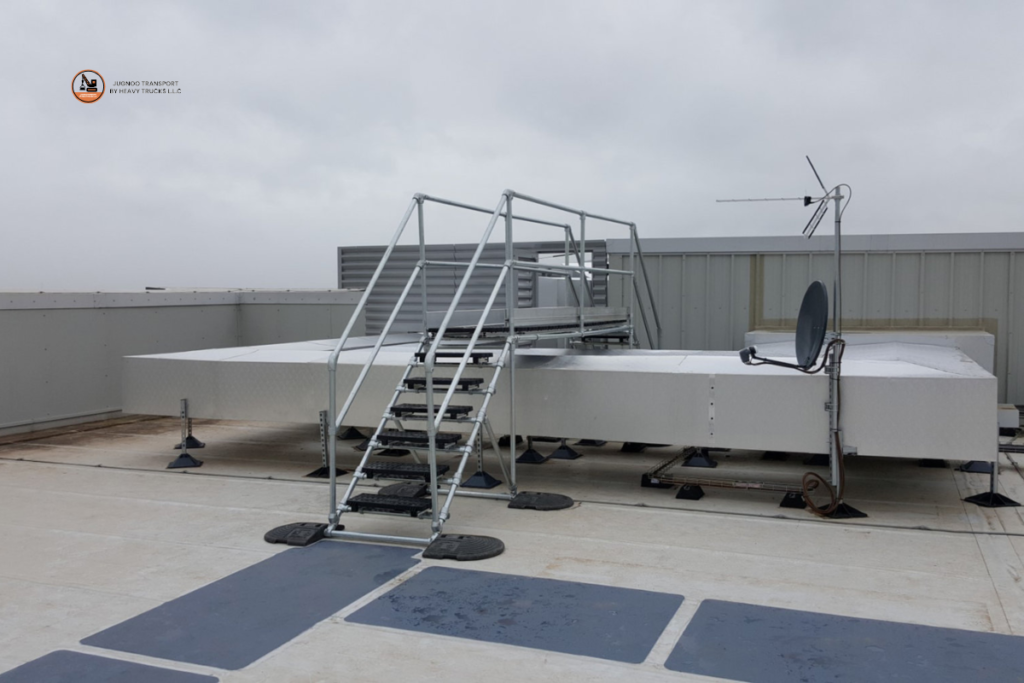
For buildings with extensive rooftop plant equipment, a temporary ladder just doesn’t cut it. These locations require a permanent roof maintenance access platform. These are fixed installations designed for the lifetime of the building.
Think of them as rooftop highways. They connect access points (like roof hatches or ladders) to the various pieces of equipment scattered across the roof . These permanent structures often include:
- Step-over platforms: Designed to safely pass over pipes, conduits, or HVAC lines without requiring workers to take an awkward step .
- Crossover bridges: Allowing passage from one roof section to another, especially over changes in elevation.
- Guarded walkways: Providing fall protection along the entire route, not just at the work site.
When designing these systems, engineers must consider the building’s structural integrity, weather conditions, and the specific frequency of use. A well-designed platform integrates seamlessly with the building’s existing safety features, ensuring that workers never have to unhook from a safety line to move from the ladder to the work area .
The Equipment That Gets Us There
While permanent platforms are installed for long-term safety, getting those materials onto the roof in the first place is a job for heavy machinery. At Jugnoo Transport, our fleet is frequently tasked with delivering boom lifts, scissor lifts, and telehandlers to job sites.
These machines are the workhorses of maintenance. They lift workers and materials to height, allowing for installation and repairs. However, they are only safe when treated with respect. Two of the most dangerous mistakes operators make involve misjudging the machine’s capabilities.
The Danger of Overloading the Boom
Every aerial lift and telehandler comes with a load chart. This chart is the machine’s bible. It tells the operator exactly how much weight the machine can handle at specific boom angles and lengths .
Overloading the Boom is a critical error that happens when operators ignore these charts. They might think, It’s just one more bundle of shingles, or This is a heavy-duty machine; it can handle it. Unfortunately, physics doesn’t care about opinions. Exceeding the load capacity shifts the machine’s center of gravity. At a certain height or reach, that extra weight causes the machine to tip forward. It’s not just about the weight in the basket; it’s about the leverage that weight creates when the boom is extended.
Ignoring the Load Chart
Closely related to overloading is simply Ignoring the Load Chart. This chart isn’t just a suggestion; it is a legal and safety requirement. Different attachments, such as buckets vs. forks, change the machine’s capacity .
Operators must consult the chart for every new position. A machine that can lift 1,000 pounds close to the chassis might only lift 300 pounds at full horizontal reach. Assuming the capacity remains constant throughout the range of motion is a recipe for disaster. We ensure that the equipment we deliver is in top condition, with all safety decals and charts clearly visible, but it is up to the operator on site to read and follow them.
The Instability of Operating on Unstable Ground
You’ve placed the machine, checked the load chart, and are ready to lift. But what is the machine sitting on? A boom lift is only as stable as the ground beneath it.
Operating on Unstable Ground is a hidden danger. This includes soft soil after rain, gravel, uneven pavement, or sloping surfaces. Modern lifts have sophisticated leveling systems and tilt alarms, but they have limits . If the chassis exceeds its approved angle while the boom is elevated, the machine is at risk of tipping.
Even if the machine doesn’t tip, operating while unstable puts immense stress on the boom and turntable. It is vital to use outriggers where required and to use cribbing—wooden blocks or mats—to create a firm, level base for the machine. A few minutes spent preparing the ground is nothing compared to the cost of a rollover.
The Human Factor: Visibility
Even with the perfect roof access platform system and a perfectly positioned boom lift, human error remains the biggest variable. One of the most overlooked aspects of working at height is Poor Visibility and Blind Spots.
When you are in a boom lift basket or standing on a platform, your view of the world changes. The operator on the ground has a different perspective than the worker in the air. Poor visibility refers to several scenarios:
- Operator-to-Ground Communication: The lift operator often cannot see directly below the basket. If a ground worker needs to hand up a tool, the operator might not see them approaching, leading to pinch points or dropped objects.
- Obstructed Views: The structure of the lift itself—the cylinders, hoses, and boom arms—can create blind spots. Operators must constantly move their heads and position the basket to get a clear line of sight to their work area.
- Environmental Factors: Glare from the sun, working at night, or fog can drastically reduce visibility.
- Unseen Ground Hazards: While focused on the work at height, the operator might not see a vehicle or pedestrian moving into the swing radius of the machine’s counterweight.
Mitigating these risks requires clear communication protocols. Using hand signals, two-way radios, or having a dedicated spotter on the ground ensures that the person in the air isn’t working in isolation.
Why Jugnoo Transport?
Connecting all these elements—the safety of a permanent roof access platform system, the precision of a metal roof access platform, and the power of heavy machinery—requires seamless logistics. At Jugnoo Transport, we are the link between the equipment yard and your job site.
We specialize in the heavy haul and specialized transport required for the construction and maintenance industry. We know that a delay in equipment delivery means a delay in securing that roof hatch or repairing that leak. Our fleet is equipped to handle the delicate balance of delivering large, heavy machinery like boom lifts and telehandlers, as well as the long, awkward loads of modular walkway components for a roof maintenance access platform.
We pride ourselves on our punctuality and our care for your equipment. When you trust Jugnoo Transport to move your assets, you can focus on what you do best: maintaining the buildings that keep our communities running.
Conclusion: Building a Culture of Safety
Safety at height is a chain. It begins with a well-designed permanent platform, continues with the correct setup of mobile equipment, and ends with the awareness of the operator. By respecting the machinery, adhering to load charts, ensuring stable ground, and maintaining clear visibility, we can ensure that every maintenance worker goes home safely at the end of the day.Whether you are installing a new crossover system or need a 60-foot boom lift delivered for a weekend project, remember that safe access starts with smart planning and reliable partners. Contact Jugnoo Transport today for all your equipment moving needs.