
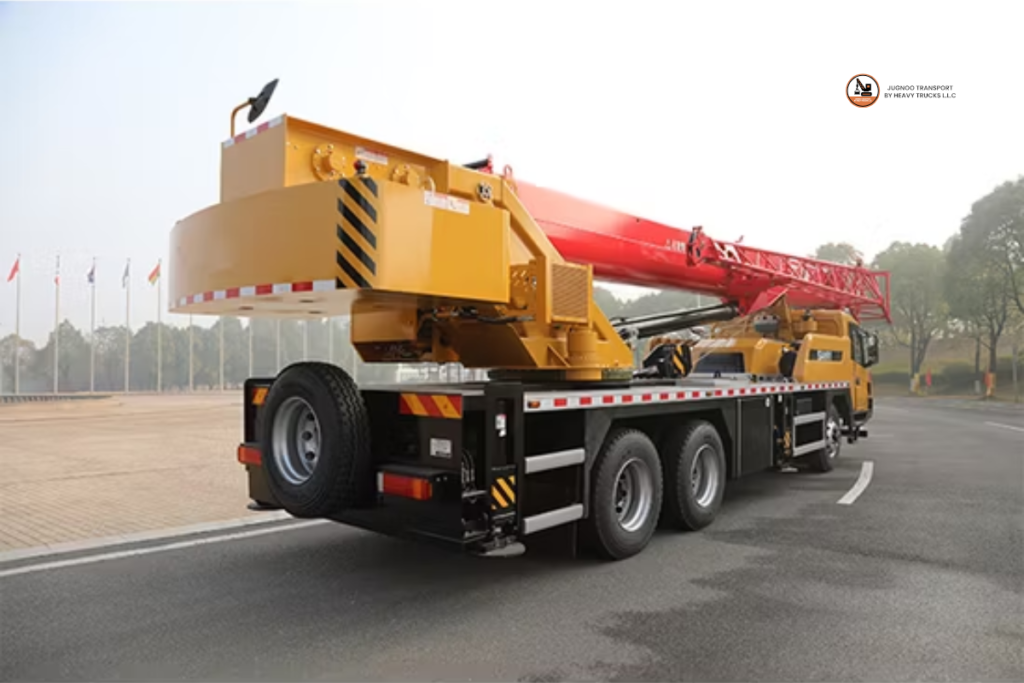
25 ton mobile crane specifications covering lifting capacity, boom length, engine power, dimensions, safety features, and operating performance.
When it comes to heavy lifting on construction sites, industrial projects, or infrastructure jobs, the 25 ton mobile crane is often the unsung hero. It is the perfect middle-ground machine—powerful enough to handle significant lifts, yet compact enough to maneuver around busy job sites without too much hassle.
If you are in the market for lifting equipment or simply want to understand the machinery that helps build our world, you have come to the right place. At Jugnoo Transport, we specialize in the safe and efficient movement of heavy machinery, and we believe that knowledge is the first step to a successful project. Understanding the specifications of a 25t mobile crane specifications sheet is crucial for safety and efficiency.
We will break down everything you need to know about these versatile machines. We will cover load capacity, boom length, engine power, and most importantly, the critical safety rules you must follow to avoid disaster. We will also highlight common mistakes like Overloading the Boom, Ignoring the Load Chart and Operating on Unstable Ground, which are leading causes of crane accidents.
What is a 25 Ton Mobile Crane?
Before diving into the numbers, let us clarify what we mean by a 25 ton mobile crane. Essentially, this is a crane capable of lifting loads up to 25 metric tons. However, the mobile aspect is just as important as the crane part. These machines are mounted on a carrier (wheels) allowing them to travel on public roads or around job sites.
There are two common types you will encounter:
- Rough Terrain Cranes: Built for off-road jobs. They have four large tires and a single cab for the crane operator .
- Truck Mounted Cranes: These are the workhorses of the city. They have two cabs—one for driving and one for operating the crane. They are perfect for highway travel and urban construction. Often referred to as a 25 tonne truck mounted crane, this configuration is popular for its balance of mobility and lifting power .
At Jugnoo Transport, we see these machines daily. Whether we are delivering a new 25 tonne truck mounted crane to a highway project or picking one up from a rental yard, knowing these specs inside and out is our business.
Key Specifications of a 25 Ton Mobile Crane
When evaluating a 25t mobile crane specifications sheet, the numbers can be overwhelming. Here are the most important ones broken down into simple terms.
1. Load Capacity and Lift Charts
The headline feature is, of course, the 25-ton capacity. But there is a catch: a crane cannot lift 25 tons in every situation. The lifting capacity depends on the boom angle and the radius from the crane.
- Max Rated Capacity: Most 25-ton cranes achieve their maximum lift (25 tons) at a very close range, usually around 3 meters from the center of the crane .
- Load Moment: This is a fancy term for the force that tries to tip the crane over. As the boom extends or lowers, the leverage changes. A 25-ton crane might lift 25 tons at 3 meters, but only 5 tons at 20 meters.
- The Load Chart: This is the most important document in the cab. It tells the operator exactly how much weight can be lifted at different boom lengths and angles. Ignoring the Load Chart is not just a mistake; it is an invitation for disaster.
2. Boom Length and Reach
How high and far can you reach? Modern 25-ton cranes are surprisingly capable.
- Standard Boom: Typically, the main boom extends in sections (usually 4 or 5 sections). You can expect a maximum standard boom length between 30 meters and 40.5 meters .
- With Jib (Extension): For those jobs requiring extra height, a jib can be attached. With a jib, a 25 ton mobile crane can reach impressive heights of up to 48 meters . Imagine lifting heavy steel to the top of a 16-story building—that is the reach we are talking about.
3. Dimensions and Weight
Getting the crane to the site is our specialty at Jugnoo Transport. Knowing the dimensions is vital for logistics.
- Overall Length: Expect the carrier to be between 11.7 and 12.9 meters long .
- Overall Width: Usually around 2.5 to 2.7 meters wide.
- Overall Height: For transport, the height is generally around 3.3 to 3.5 meters .
- GVW (Gross Vehicle Weight): When fully loaded and ready to work, a 25t mobile crane can weigh between 26,000 kg and 30,000 kg (26 to 30 metric tons) . This is crucial information for obtaining travel permits and ensuring roads and bridges can handle the load.
4. Engine and Travel Speed
These aren’t just lifting machines; they are vehicles too.
- Engine Power: Most modern 25-ton cranes are powered by diesel engines ranging from 142 kW (190 HP) to 206 kW (276 HP) . This power allows them to handle steep grades on job sites.
- Travel Speed: A 25 tonne truck mounted crane designed for road travel can reach highway speeds of 80 km/h to 85 km/h . Rough terrain models are slower, topping out around 30-50 km/h since they are meant for off-road work .
5. Outriggers: The Foundation of Safety
You might notice “legs” that extend from the crane when it arrives on site. These are outriggers. They are non-negotiable for safe lifting.
- Outrigger Span: To provide a stable base, the outriggers extend wide. The lateral span (side to side) is usually around 6.0 to 6.4 meters, and the longitudinal span (front to back) is around 5.1 to 5.2 meters .
- Function: These pads spread the massive weight of the crane and the load over a wider area, reducing ground pressure and preventing the crane from tipping.
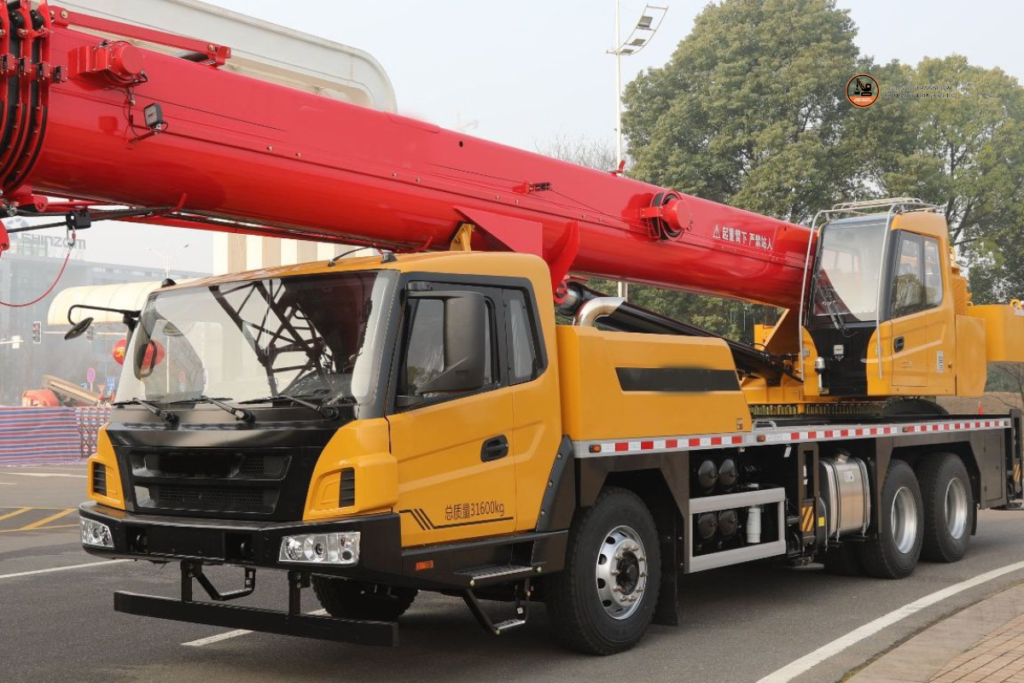
The Safety Triangle: Common Risks and How to Avoid Them
Machinery is only as safe as the people operating it. At Jugnoo Transport, safety is our number one core value when hauling and setting up heavy equipment. When using a 25-ton crane, three specific dangers are responsible for the majority of accidents.
Overloading the Boom, Ignoring the Load Chart
This is the number one killer in the crane industry. It is easy to look at a piece of steel and guess its weight. But guessing is not allowed in crane operations.
Why it happens: Pressure from site supervisors to get the job done, or a simple miscalculation of the material’s weight.
The Consequence: When you Overloading the Boom, Ignoring the Load Chart, you are betting against physics. The crane can tip forward, the boom can buckle and collapse, or the cables can snap.
The Solution: Always consult the load chart. Every lift is different. If the load is 20 tons and the chart says at this radius the crane can only lift 18 tons, you must move the crane closer, or get a bigger crane. At Jugnoo Transport, we ensure that when we deliver your crane, you have all the necessary documentation, but it is up to the operator to use it.
Operating on Unstable Ground
A crane is a delicate balance of weights and counterweights. If the ground gives way, that balance is gone.
Why it happens: Rain-softened ground, hidden voids under the surface, or parking the outriggers on asphalt without proper cribbing (wooden or steel pads to spread the weight).
The Consequence: When Operating on Unstable Ground, one outrigger can sink. In an instant, the crane is leaning. This leads to tip-overs, which are catastrophic and often fatal for the operator and nearby workers .
The Solution: The ground must be level and compacted. Outrigger pads must be placed on solid ground or on large mats designed to distribute the load. A site survey should always be done before the crane arrives .
Poor Visibility and Blind Spots
A crane is a massive machine, and the operator sits in a cab high above the ground. While this gives a great view of the load, it creates massive blind spots close to the machine.
Why it happens: The design of the carrier and the boom creates areas where the operator simply cannot see people or obstacles on the ground.
The Consequence:Poor Visibility and Blind Spots lead to caught-between or struck-by accidents. A worker walking behind the crane while it swings, or a spotter standing where the operator can’t see them, can be crushed. It is also a hazard during setup and tear-down .
The Solution: Never rely on mirrors alone. A qualified signal person (spotter) must be on the ground with a clear line of sight to both the operator and the load. Clear hand signals or radio communication is mandatory. Furthermore, create a restricted access zone around the crane’s swing radius so that only essential personnel are in the danger area .
Why Choose Jugnoo Transport for Your Heavy Hauling Needs?
Understanding crane specs is one thing; getting that expensive piece of machinery from Point A to Point B safely is another. This is where Jugnoo Transport shines.
Whether you have rented a brand new 25 tonne truck mounted crane or need to move your existing fleet to a new site across state lines, you need a partner who understands the weight, dimensions, and fragility of the equipment.
- Specialized Trailers: We use lowboy and multi-axle trailers designed to handle the heavy axle loads (up to 12,300 kg per axle) of cranes like the XCMG XCT25 .
- Permit Experts: With travel heights often exceeding 13 feet and weights pushing 30 tons, moving a crane requires specific oversize/overweight permits. We handle all the paperwork.
- Safety First: Our philosophy matches yours. We know the dangers of shifting loads and unstable transport. We secure every machine meticulously so you receive it ready to work.
Whether you are dealing with a rough-terrain unit or a highway-ready 25 ton mobile crane, trust Jugnoo Transport to get it there on time and without incident.
Conclusion
The 25 ton Mobile Crane is a marvel of engineering, offering a perfect blend of power, reach, and mobility. From its robust 192kW engine to its 40-meter booms, every specification is designed to get heavy jobs done . However, with great power comes great responsibility.
Remember that the machine is only as capable as the team operating it. Respect the physics. Never bypass the safety protocols by Overloading the Boom, Ignoring the Load Chart. Always double-check the ground conditions, because Operating on Unstable Ground is a recipe for disaster. And finally, maintain constant communication to mitigate Poor Visibility and Blind Spots.
By respecting the machinery and the environment it works in, you ensure everyone goes home safe at the end of the day. And when it is time to move that crane to its next challenge, you know who to call.Need to move a 25-ton crane?
Contact Jugnoo Transport today for a free quote and experience the safest haul in the business.