
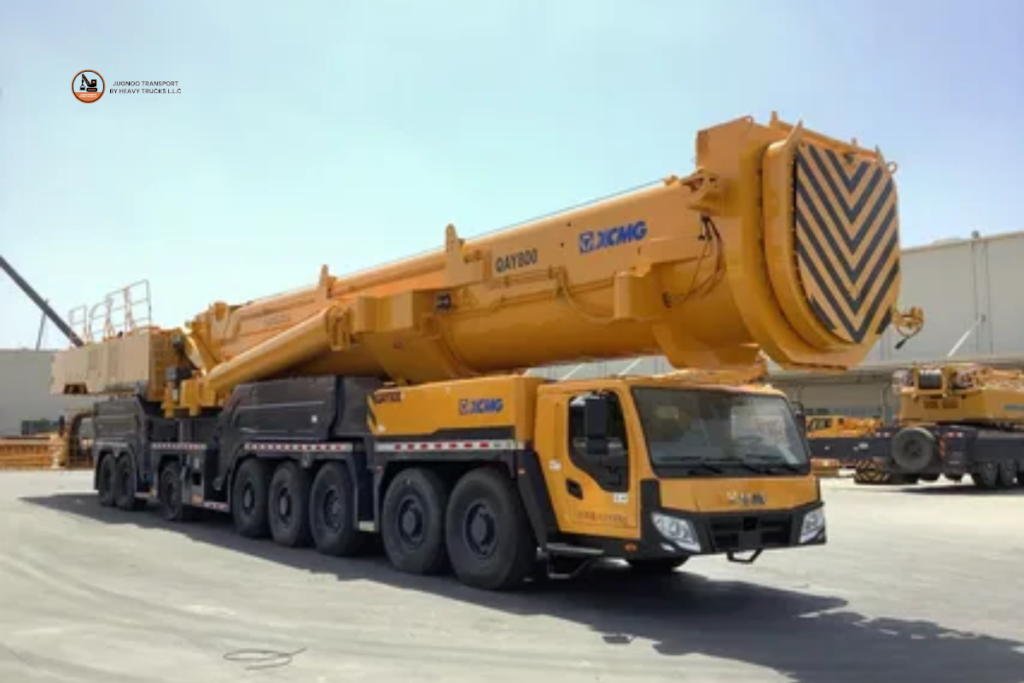
Rent an 800 ton mobile crane for heavy lifting projects. Ideal for construction, industrial jobs, and large-scale infrastructure work.
When you are in the business of building big things—like bridges, power plants, or massive industrial complexes—you quickly realize that regular equipment just won’t cut it. There comes a point in every major infrastructure project where you need to call in the big iron. That is where the power of an 800 ton mobile crane rental comes into play. These engineering marvels represent the pinnacle of lifting technology, designed to move objects that weigh as much as a small building.
At Jugnoo Transport, we understand that deciding to rent a machine of this caliber is a significant decision. It’s not just about picking something up; it’s about precision, safety, and flawless execution. Whether you are setting massive wind turbines, positioning heavy refinery equipment, or lifting bridge sections, having the right crane and the right team makes all the difference.
We will break down everything you need to know about these giant machines. We will look at what they are, the technical specifications that matter, and most importantly, how to avoid the common pitfalls that can turn a major lift into a major disaster.
Why Choose an 800 Ton Mobile Crane?
Before we dive into the nuts and bolts, let’s talk about why a project might require an 800 ton mobile crane rental. Simply put, time is money on a job site. Trying to assemble a massive piece of equipment using smaller cranes is like trying to move a piano up a flight of stairs with a team of people—it is slow, dangerous, and inefficient.
An 800-ton crane allows you to perform heavy lifts in a single, controlled motion. Instead of assembling a reactor or a turbine piece-by-piece in the air (which is risky), you can have it built on the ground and lifted into place as one unit. This drastically reduces the time your crew spends working at height and speeds up the overall project timeline. Industries like petrochemicals, power generation, and large-scale infrastructure rely on these cranes because they offer the power and reach necessary to get the job done right the first time.
Understanding 800 Ton Crane Specifications
When you search for an 800 ton crane specifications sheet, you might feel overwhelmed by numbers and jargon. But understanding the basics is crucial to planning your project. Not all 800-ton cranes are created equal. Generally, they come in two main types: the all-terrain crane and the 800 ton crawler mobile crane.
The All-Terrain Giant
An all-terrain 800-ton crane is mounted on a massive truck chassis with many axles. This allows it to drive on public roads (with proper permits and escorts) to the job site. The main advantage here is mobility. It can arrive, set up, and start working relatively quickly. However, because it relies on outriggers to stabilize itself, it needs a very solid, prepared surface.
The Crawler Beast
On the other hand, an 800 ton crawler mobile crane sits on tracks, like a tank. It does not drive on roads; it is brought in on multiple trucks and assembled on-site. The magic of a crawler is stability. Because the weight is distributed over the tracks, it can move slowly around the job site while carrying a load—something a wheeled crane cannot do. This makes it perfect for jobs like moving a heavy generator across a plant floor or walking a load into a precise position.
Key Specifications to Know
When reviewing the specs, here are the key figures you should focus on:
- Maximum Lifting Capacity: Obviously, this is 800 tons. But remember, that capacity is only available at a very specific, short radius.
- Boom Length: The boom is the large arm that does the lifting. For these cranes, the main boom can extend well over 100 meters. When you add a jib (an extension), the height and reach become truly staggering, often exceeding 150 meters .
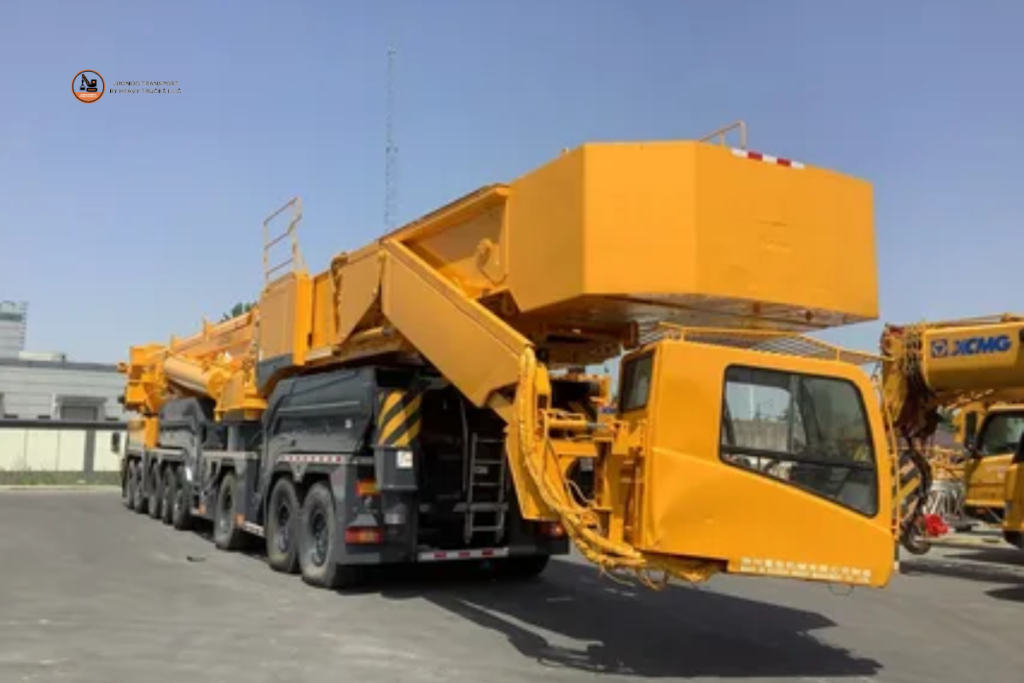
- Counterweight: These cranes use massive amounts of counterweight to prevent tipping. This can be in the form of heavy concrete blocks or even derrick systems that add extra stability. The counterweight for an 800-ton crane can weigh several hundred tons itself.
- Engine Power: You need serious power to move serious weight. These machines pack engines with over 400 kW of power to handle the hydraulic systems that drive the winches and boom .
The Critical Four: Avoiding Catastrophic Mistakes
Operating an 800-ton crane is a high-stakes game. The margin for error is almost zero. Throughout our years at Jugnoo Transport, we have seen that accidents rarely just happen. They are the result of ignoring fundamental safety rules. Here are four critical dangers we always watch for.
1. The Danger of Overloading the Boom
This is the number one rule in crane operation, and breaking it is the fastest way to turn a million-dollar machine into a pile of scrap metal. Overloading the Boom means trying to lift a load that is too heavy for the crane’s current configuration.
It’s not as simple as saying, It’s an 800-ton crane, so it can lift 800 tons. That capacity changes depending on how far from the crane the load is (the radius) and how high you have to lift it. Imagine holding a weight close to your chest—it’s easy. Now try holding it at arm’s length. The same weight becomes much harder to hold. A crane works the same way.
When you overload the boom, the stress on the steel becomes immense. The boom can buckle, or the crane can lose its balance. The only defense against this is respecting the machine’s limits. This is why we emphasize the next point so heavily.
2. The Grave Mistake of Ignoring the Load Chart
In every crane cab, there is a bible. It is called the load chart. Ignoring the Load Chart is not just a mistake; it is a willful act of negligence. The load chart is a complex set of diagrams and numbers that tells the operator exactly how much weight the crane can safely lift in every possible configuration.
Are you lifting with the full main boom? Are you using a jib? Outriggers fully extended, or is the crane on rubber (its tires)? You lifting over the side, or over the front? The load chart has an answer for every question.
A professional operator from Jugnoo Transport will consult the load chart before making any lift. We calculate the weight of the load, add in the weight of the rigging (hooks, slings, shackles), and then check the chart to ensure the crane is set up correctly for that specific lift. To ignore this chart is to gamble with lives.
3. The Hidden Threat: Operating on Unstable Ground
A crane can be perfectly configured, and the operator can be highly skilled, but if the ground gives way, disaster is certain. Operating on Unstable Ground is a hazard that is often overlooked until it’s too late.
An 800-ton crane exerts immense pressure on the ground, particularly at the points where the outriggers rest or where the crawler tracks make contact. These “point loads” can be thousands of pounds per square foot. If the ground is soft, recently filled, or uneven, the crane can tip over suddenly.
Before any setup, we conduct a thorough geotechnical survey of the site. We need to know the ground’s bearing capacity. Often, we must lay down heavy-duty crane mats or steel plates to distribute the weight and create a stable, level platform. Never assume the ground is strong enough; you have to know it is.
4. The Risk of Poor Visibility and Blind Spots
From the operator’s cab 20 or 30 feet in the air, the world looks very different. While modern cabs offer great visibility, they cannot eliminate blind spots. Poor Visibility and Blind Spots are a constant challenge, especially when lowering a load into a tight spot or swinging it over a congested area.
A load swinging from a cable is not under full control; it can pendulum if not handled smoothly. If the operator cannot see the landing zone clearly, or if a ground worker steps into a blind spot, the results can be fatal.
This is why crane operations are never a one-man show. Jugnoo Transport always provides a dedicated signal person or rigger on the ground. This person is the operator’s eyes and ears. Using hand signals or two-way radios, they maintain constant communication, guiding the operator and keeping everyone out of the danger zone . We establish clear communication protocols before the first lift is ever made.
Preparing for Your Heavy Lift Project
So, you have a heavy lift coming up. How do you prepare? The planning phase is just as important as the lift itself.
First, contact a specialist like Jugnoo Transport early. Bring us into the conversation while your project is still on the drawing board. We can advise on crane positioning, ground preparation, and access roads. This foresight can save you tens of thousands of dollars in site modifications later.
Second, be ready to share all the details. We need to know the weight of the heaviest piece, the dimensions, the height of the lift, and where the load needs to be placed. We also need to know about site constraints, like overhead power lines, underground utilities, or limited space .
Finally, trust the experts. When you rent an 800-ton crane from Jugnoo Transport, you aren’t just getting a machine. You are getting a team of planners, engineers, and operators who live and breathe heavy lifting. We will create a comprehensive lift plan that accounts for every variable, ensuring that on the day of the lift, everything runs smoothly and safely.
Why Choose Jugnoo Transport for Your 800 Ton Mobile Crane Rental?
At Jugnoo Transport, we pride ourselves on being more than just equipment providers. We are your partners in project completion. When you need an 800 ton mobile crane rental, you need reliability, expertise, and a commitment to safety.
- Modern Fleet: We maintain our cranes to the highest standards, ensuring that when our 800 ton crawler mobile crane arrives on your site, it is ready to perform.
- Expert Operators: Our operators are among the best in the industry. They don’t just drive the crane; they understand the physics, the load charts, and the safety protocols required to get the job done.
- Comprehensive Planning: From the initial site survey to the final lift, we are with you every step of the way, ensuring that risks like Operating on Unstable Ground or Poor Visibility and Blind Spots are managed and mitigated.
- Unmatched Safety Record: We have a zero-compromise policy on safety. We never cut corners. We would rather take the time to do it right than risk the consequences of Overloading the Boom or Ignoring the Load Chart.
Conclusion
Heavy lifting is not for the faint of heart. It requires respect for the machinery and a deep understanding of the forces at play. Whether your project is in the energy sector, heavy construction, or industrial manufacturing, having access to an 800 ton crane specifications-grade machine is just the starting point.
The real value comes from the expertise behind the machine. By understanding the dangers and planning meticulously, you can ensure that your next heavy lift is a success.When you are ready to take your project to the next level, call the team that knows how to handle the heavyweights. Trust Jugnoo Transport to provide the power, the precision, and the professionalism you need. Let’s lift something great together.