
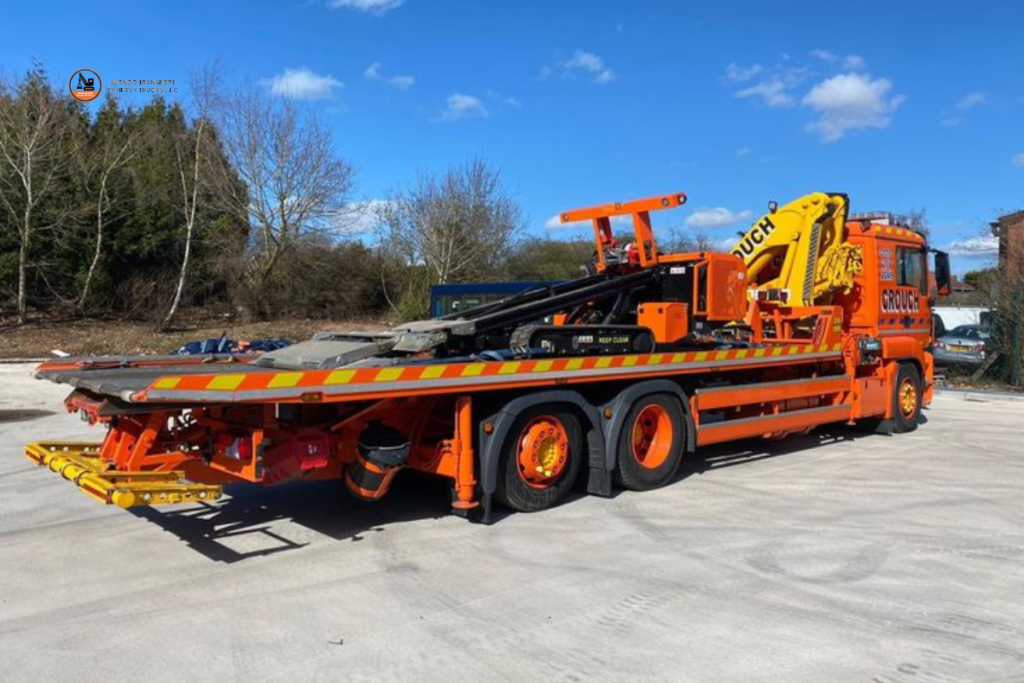
Big Recovery Trucks provide heavy-duty towing, roadside recovery, and vehicle transport for breakdowns, accidents, and oversized vehicles.
The world of commercial transport and heavy industry is the backbone of our economy. We see these massive vehicles on the highway, at construction sites, and in industrial parks, but we rarely think about what happens when something goes wrong. When a 40-tonne semi-trailer jackknifes on a rainy night, or when a critical piece of mining equipment breaks down deep inside a quarry, you cannot just call any local garage. You need specialized firepower.
This is the world of heavy duty recovery trucks. These aren’t your average wreckers you see helping a motorist with a flat tire. These are purpose-built, incredibly powerful machines designed to lift, pull, and haul the biggest vehicles on the planet. At Jugnoo Transport, we specialize in this exact niche. We are the people you call when the situation is critical, the loads are massive, and the recovery seems impossible.
We’re going to explore the fascinating world of large tow trucks, the challenges operators face, and how professional firms like Jugnoo Transport use heavy recovery vehicles to solve problems and keep industries moving.
The Giants of the Road: What Are Heavy Recovery Vehicles?
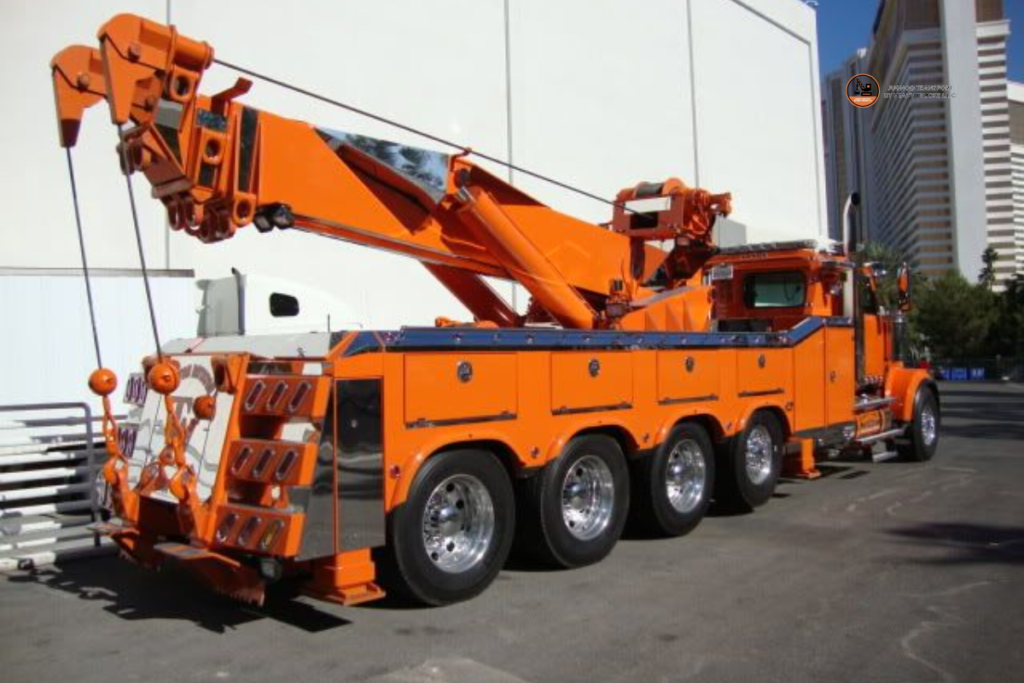
Before we dive into the complexities, it’s important to understand the tools of the trade. Heavy recovery vehicles are a distinct class of truck. They are built on extra-strong chassis, often with three or four axles, to handle the immense stress of recovering vehicles that can weigh as much as 120 tonnes or more .
Think of them as a combination of a tow truck and a mobile crane. They are equipped with powerful winches that can pull with tens of thousands of pounds of force, and large tow trucks often feature a rotator — a boom that can rotate 360 degrees. This allows the operator to lift a wrecked truck from a ditch without having to position their own vehicle dangerously close to the edge . These machines are the superheroes of the highway, rolling out when the situation looks dire.
At Jugnoo Transport, our fleet of heavy duty recovery trucks is ready 24/7 to respond to incidents across the region. Whether it’s a rolled-over tanker or a bulldozer that has thrown a track, we have the iron to get the job done.
The High-Stakes World of Commercial Recovery
Operating these giants is not just about having a big engine. It requires a deep understanding of physics, safety, and strategy. Every recovery operation is a puzzle, and if you solve it wrong, people can get hurt, and equipment can be destroyed. Here are some of the critical considerations our professional operators face every day.
Overloading the Boom and Ignoring the Load Chart
This is perhaps the most dangerous mistake a recovery operator can make. Every heavy recovery vehicle comes with a load chart provided by the manufacturer. This chart is the bible for any lift. It tells the operator exactly how much weight the boom can handle at different angles and extensions.
Overloading the Boom happens when an operator tries to lift a load that exceeds these ratings. Maybe they are in a hurry, or perhaps they underestimate the weight of the casualty vehicle and its cargo. The result can be catastrophic. Booms can buckle, cables can snap, or the entire recovery truck can tip over. A full tanker truck full of liquid, for example, is a dynamic load. As you lift it, the liquid sloshes, shifting the center of gravity and dramatically increasing the strain on the boom.
Ignoring the Load Chart is a sign of poor professionalism. At Jugnoo Transport, our training emphasizes that the load chart is not a suggestion; it is a strict set of limits. Before any lift, we calculate the weight of the vehicle, factoring in things like trapped mud, snow, or cargo. We consult the chart for our heavy duty recovery trucks to ensure we have a massive safety margin. There is no room for guesswork when millions of dollars worth of equipment and human lives are hanging in the balance.
Operating on Unstable Ground
A recovery scene is rarely a nice, flat, paved parking lot. Often, the casualty vehicle is in a ditch, on a soft shoulder, in a muddy field, or on a rocky hillside. This is one of the most common and serious hazards we face.
Operating on Unstable Ground means the very earth beneath your feet can become a deadly threat. If the ground gives way under the weight of the recovery truck, it can roll over, crushing the operator and anyone nearby. Similarly, if you are trying to pull a stuck vehicle out of the mud, the recovery truck needs to be anchored to something solid. If it isn’t, the winching force will simply pull the recovery truck towards the stuck vehicle, rather than pulling the stuck vehicle out .
Before any Jugnoo Transport recovery vehicle starts working, our team conducts a thorough ground stability assessment. We look for soft spots, hidden voids, and the slope of the terrain. If the ground is suspect, we take steps to mitigate the risk. This might mean using wooden cribbing or steel plates to distribute the weight of our large tow trucks over a wider area. It might involve using specialized anchors to secure the truck to solid ground. We never assume the ground will hold; we ensure it will.
Poor Visibility and Blind Spots
Recovery work is dangerous, not just because of the heavy equipment, but because of the environment. Most recoveries happen on or near active roadways, with traffic whizzing by at high speeds. Add darkness, rain, or fog to the mix, and you have a recipe for disaster.
Poor Visibility and Blind Spots are a constant battle. The operators inside the cab of a heavy recovery vehicle cannot see everything. There are massive blind spots directly behind the truck, close to the wheels, and sometimes to the sides. Meanwhile, other operators are on the ground, guiding cables, attaching chains, and directing traffic. If the driver cannot see them, or if an approaching motorist cannot see the recovery scene, a tragedy can occur .
Nighttime operations are especially tricky. Even with flashing lights, tired drivers can miss a closed lane and plow into a scene .
Professionalism means mitigating these risks. At Jugnoo Transport, we use a multi-layered approach to safety:
- High-Visibility Apparel: Every team member on the ground wears reflective clothing so they can be seen clearly.
- Lighting: We deploy portable floodlights to turn night into day at the work site, ensuring everyone can see obstacles and each other.
- Communication: We use clear hand signals and two-way radios. The driver and the ground crew are in constant communication.
- Setters and Spotters: We have dedicated team members whose only job is to watch traffic and spot for the operator, guiding them through complex maneuvers and warning them of hazards in their blind spots .
The Jugnoo Transport Difference
You might be wondering, Why should I call Jugnoo Transport for my commercial recovery needs? The answer is simple: Expertise and Preparation.
Owning heavy duty recovery trucks is one thing. Knowing how to use them safely and efficiently is another. Our team undergoes continuous training. We study load charts until they are second nature. We practice recovery scenarios in safe environments so we are ready for the real thing. We maintain our fleet meticulously because a mechanical failure during a recovery is unacceptable.
When you are facing a downtime situation with a commercial vehicle, time is money. But rushing leads to mistakes like overloading the boom or ignoring the load chart. At Jugnoo Transport, we are fast because we are methodical. Our operators arrive with a plan. They assess the scene, check for hazards like operating on unstable ground, and account for challenges like poor visibility and blind spots before a single cable is pulled.
We serve a wide range of clients
- Fleet Owners: When one of your trucks is down, we get it back to your depot or to a repair facility quickly and safely.
- Construction Companies: We can recover stuck excavators, bulldozers, and dump trucks from the toughest job sites.
- Logistics Companies: From jackknifed trailers to overturned cargo vans, we handle it all with care to minimize damage to your goods.
Conclusion
The world of commercial and industrial recovery is not for the faint of heart. It requires a unique blend of mechanical knowledge, physical courage, and meticulous planning. The machines themselves—the heavy recovery vehicles and large tow trucks—are marvels of engineering. But they are only as good as the teams operating them.
At Jugnoo Transport, we combine top-of-the-line heavy duty recovery trucks with a team of highly trained professionals who respect the power of their equipment and the dangers of the job. We understand the risks: the physics of the load, the stability of the ground, and the chaos of the traffic around us.
So, the next time you see one of our bright large tow trucks on the highway, you will know there is more to it than just a big hook. You are looking at a mobile command center, staffed by experts ready to tackle the biggest challenges on the road. And if you ever find yourself in need of heavy recovery services, you know who to call. Jugnoo Transport — where we turn the impossible into the routine.