
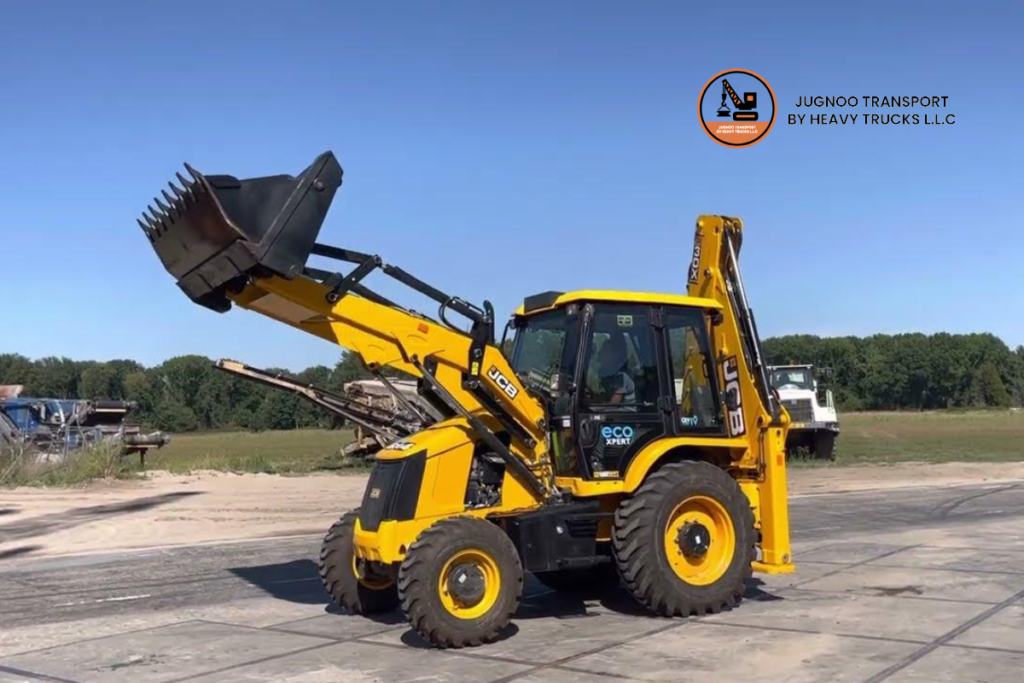
Official JCB Boom Loader. Versatile telehandler with high lifting capacity & maximum reach for construction & agricultural material handling.
If you work in construction, farming, or any industry that requires moving heavy materials to dizzying heights, you’ve likely seen or operated a JCB boom loader. These powerful machines, also known as JCB telescopic handlers or JCB boom lifts, are the backbone of modern construction material handling. They reach where forklifts can’t and lift what ladders won’t.
But here’s a challenge every project manager, site operator, and logistics coordinator faces: getting these magnificent pieces of machinery to and from the site. That’s where understanding the precise dimensions and weight of your JCB boom loader becomes not just helpful, but critical. And when it’s time to move one, that’s a job for specialists—like our team at Jugnoo Transport.
This comprehensive guide will walk you through everything you need to know about JCB boom loader specs and the intricacies of transporting them safely and efficiently.
Understanding the Machine: More Than Just a Big Tool
Before we dive into numbers, let’s understand what we’re dealing with. A JCB telescopic handler is a versatile powerhouse. Unlike a standard forklift, it has a boom that can extend forward and upward, and often features a 360-degree rotating cab. This allows operators to place loads with incredible precision in hard-to-reach spots—whether it’s delivering bricks to a second-story wall or positioning roofing trusses.
Their versatility makes them indispensable, but that same complexity adds layers to their transport. You’re not just moving a heavy vehicle; you’re moving a piece of precision engineering with long, unbalanced dimensions.
Why Dimensions and Weight Matter So Much
Knowing the exact specs of your JCB boom loader is the first step in:
- Planning Site Logistics: Can it fit through your site gates? Under overhead power lines or scaffolding?
- Ensuring Safe Operation: Understanding the machine’s footprint is key to operating on unstable ground.
- Organizing Transport: This is the big one. Accurate specs determine the type of trailer, permit requirements, and route planning needed for legal and safe movement.
Getting these details wrong can lead to costly delays, damage, or serious safety incidents. Let’s break down the specifics.
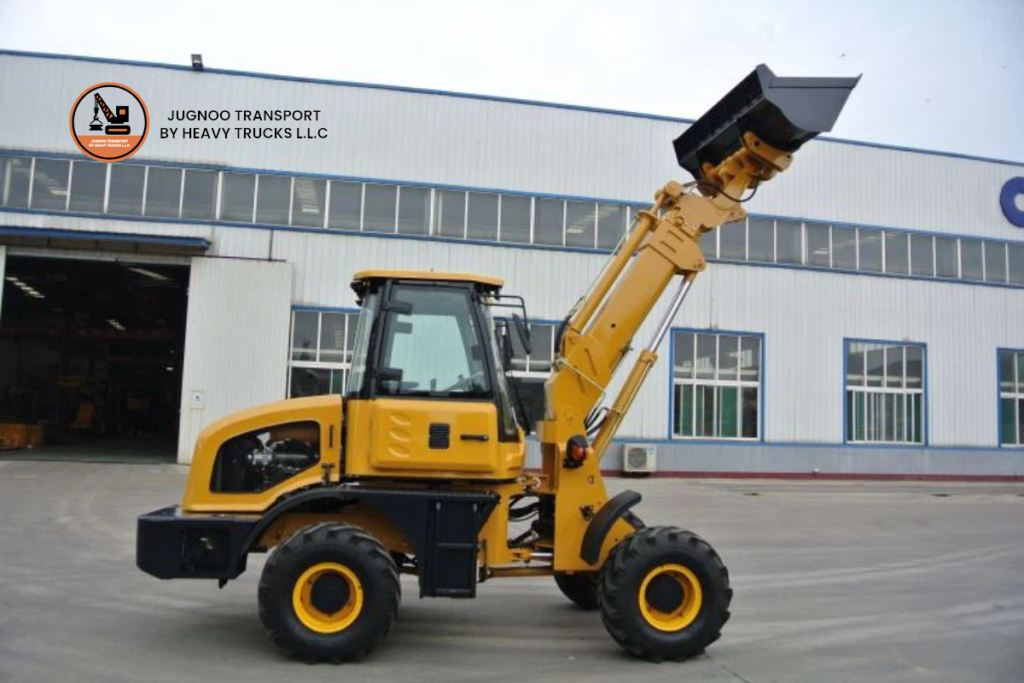
JCB Boom Loader Dimensions: A Model-by-Model Breakdown
Dimensions vary significantly between models. Always consult your specific operator’s manual for exact figures, but here is a general guide to some of the most popular JCB telehandler models.
Crucial Dimension Terms:
- Transport Length: Measured with the boom fully retracted and lowered. This is your key number for transport.
- Transport Width: Usually the cab width or the width of the outriggers/stabilizers (if retracted).
- Transport Height: Measured from the ground to the highest fixed point (like the cab roof) with the boom down.
- Lift Height: The maximum vertical reach of the boom. Not a transport concern but vital for operation.
Popular JCB Telescopic Handler Models & Their Specs
- JCB 530-70
A workhorse on countless sites, known for its robustness and 7-meter lift height.
- Approximate Transport Length: 5.9 meters (19.4 ft)
- Approximate Transport Width: 2.5 meters (8.2 ft)
- Approximate Transport Height: 2.6 meters (8.5 ft)
- Maximum Lift Height: 7.0 meters (23 ft)
- JCB 540-170
A larger model offering greater capacity and an impressive 17-meter reach.
- Approximate Transport Length: 6.7 meters (22 ft)
- Approximate Transport Width: 2.5 meters (8.2 ft)
- Approximate Transport Height: 2.9 meters (9.5 ft)
- Maximum Lift Height: 17.0 meters (55.8 ft)
- JCB 541-70
A high-capacity model designed for heavier loads at medium heights.
- Approximate Transport Length: 6.2 meters (20.3 ft)
- Approximate Transport Width: 2.5 meters (8.2 ft)
- Approximate Transport Height: 2.8 meters (9.2 ft)
- Maximum Lift Height: 7.0 meters (23 ft)
Important Note: Attachments (forks, buckets, jibs) can add to the overall transport length. They often must be removed or securely repositioned for travel.
JCB Boom Loader Weight: The Foundation of Transport Planning
Weight is the other half of the transport equation. It determines the trailer axle configuration and the legal permits required. Like dimensions, weight varies by model, configuration, and attachments.
Key Weight Terms:
- Operating Weight: The total weight of the machine with standard equipment, full fluids (fuel, coolant, hydraulic oil), and the operator. This is its working weight.
- Shipping Weight: Typically slightly less than operating weight, often assuming nominal fluid levels. This is the closest figure for transport planning.
- Gross Vehicle Weight (GVW): The maximum the machine is designed to weigh when loaded for operation.
Sample Weights for Common Models:
- JCB 530-70: Approx. 8,500 kg (18,740 lbs)
- JCB 540-170: Approx. 11,800 kg (26,015 lbs)
- JCB 541-70: Approx. 9,900 kg (21,825 lbs)
The Golden Rule: Never estimate. Always check the machine’s data plate or official documentation for its exact weight. Overloading the boom during operation is a deadly hazard, and overloading a trailer is a legal and safety nightmare on the road.
The Transport Guide: Getting Your JCB from A to B Safely
This is where theory meets the tarmac. Transporting a JCB boom lift is a specialist task. Here’s why a professional service like Jugnoo Transport is essential.
Pre-Transport Preparation
- Clean the Machine: Remove debris from tracks and the body. This prevents material from falling onto roads.
- Secure Attachments: Lower the boom completely, retract the telescopic sections fully, and secure it according to the manual. Forks should be removed or lowered and chained. Buckets should be emptied and locked down.
- Perform a Basic Check: Ensure brakes are functional, and there are no active hydraulic leaks. Inflate tires to the correct pressure for travel.
- Documentation: Have the machine’s weight and dimension specs, registration, and insurance papers ready.
Choosing the Right Equipment
A standard equipment trailer won’t suffice. You need:
- Low-Bed Trailer (Float): Essential for their low deck height, making loading and unloading safer and easier.
- Correct Capacity: The trailer’s Gross Vehicle Mass (GVM) rating must exceed the combined weight of the trailer and the JCB.
- Proper Tie-Down Points: The trailer must have robust, rated points for chains and binders. The JCB itself has specific tie-down points (often marked) that must be used.
The Loading Process
- Stable Ground: The loading area must be firm, level, and stable. Operating on unstable ground during loading is a top cause of tip-overs.
- Correct Ramps: Use wide, high-capacity ramps that can support the machine’s point load.
- Slow and Steady: The operator should drive up in a low gear, centered on the ramps and trailer deck.
- Positioning: The machine should be centered side-to-side and positioned to distribute weight evenly over the trailer axles.
Securing the Load
This is the most critical step. A JCB telescopic handler is a top-heavy, awkward load.
- Use Rated Gear: Only use DOT-approved chains, binders, and straps with a sufficient Working Load Limit (WLL).
- The Four-Point Tie-Down: At a minimum, secure the front and rear of the machine on both sides, creating an X pattern to prevent forward, backward, and side-to-side movement.
- Boom Security: The boom must be independently secured to the trailer deck with additional chains to prevent any upward or sideways movement during transit.
- Check and Double-Check: Every chain must be tight. Re-check them after the first few miles of travel.
Route Planning and Permits
- Dimensions and Weight Dictate Permits: Due to their width (>2.5m) and weight, most JCB boom loaders require oversize/overweight travel permits. These specify the exact route, time of travel, and often require pilot/escort vehicles.
- Route Survey: A good transport company will plan a route that avoids low bridges, tight roundabouts, and weak roads.
- Pilot/Escort Vehicles: For wider loads, a lead or follow vehicle with warning signs and lights is legally required to alert other motorists.
Why Professional Transport is Non-Negotiable: The Jugnoo Transport Difference
You could attempt to transport a JCB boom loader yourself with a borrowed trailer. But the risks are enormous:
- Legal Liability: You are responsible for any damage caused by an improperly secured load. The fines for permit and securement violations are severe.
- Safety Catastrophe: A fallen machine can cause fatal accidents, devastating other road users and your business.
- Machine Damage: A drop from a trailer can write off a machine in seconds.
- Hidden Costs: The time spent arranging permits, hiring equipment, and the stress of the move has a real cost.
This is where Jugnoo Transport shines. We don’t just move stuff. We provide engineered logistics solutions for heavy machinery.
What we do for every JCB transport:
- Expert Consultation: We start by asking for your model number. We already know the specs, but we verify with you.
- Permit Procurement: We handle all the paperwork with local authorities, securing the legal permits for a smooth, compliant journey.
- Right Equipment, Every Time: We dispatch a correctly specified low-bed trailer and a professional driver who understands load dynamics.
- Masterful Load Securement: Our drivers are certified in load securement. They treat every JCB as a unique challenge, ensuring it doesn’t move an inch.
- Stress-Free Experience: You get a scheduled pick-up and drop-off time, real-time updates, and the peace of mind that comes with insured, professional service.
When you hire Jugnoo Transport, you’re not just paying for fuel and a driver. You’re investing in expertise, safety, and the assurance that your critical equipment will arrive ready to work.
Operational Safety: The Link Between Specs, Transport, and Use
Understanding dimensions and weight isn’t just for transport—it’s the bedrock of safe operation. Let’s connect the dots to the keywords you often see in safety briefs.
- Overloading the Boom & Ignoring the Load Chart: The load chart isn’t a suggestion; it’s law. It’s calculated based on the machine’s weight, balance, and structural strength. Overloading the boom, especially when extended, dramatically changes the machine’s center of gravity and can cause a catastrophic forward tip-over. The load chart accounts for the boom angle, extension, and attachment. Ignoring it is the fastest way to an accident.
- Operating on Unstable Ground: The ground pressure of a loaded JCB is immense. Operating on unstable ground—like freshly backfilled trenches, near excavations, or on soft soil—can lead to the ground giving way, causing the machine to tilt. A tilted machine has a drastically reduced safe load capacity, leading to a tip-over even with a seemingly safe load. Always use outriggers/ stabilizers if fitted, and assess ground conditions constantly.
- Poor Visibility and Blind Spots: The JCB telescopic handler has significant blind spots, especially to the rear, directly in front of the bucket, and along the long boom. Poor visibility is compounded by weather, dust, or night work. This is a major hazard for pedestrians and other site workers. Safe transport practice—like using spotters during loading—directly translates to safe site operation. Always use a banksman (spotter), maintain clear sightlines, and never rely solely on mirrors.
Case Study: A Tale of Two Transports
Scenario A: The DIY Disaster
A small construction company needed to move their JCB 540-170 to a new site 50 miles away. The owner, trying to save money, rented a trailer. He estimated the weight, didn’t get permits, and used old chains to tie it down. On the motorway, the chains loosened. The boom shifted, the weight distribution changed, and the trailer began to snake violently. The driver lost control, causing a multi-vehicle collision. The JCB was destroyed, other motorists were injured, and the company faced lawsuits and massive insurance premiums. The savings cost them everything.
Scenario B: The Jugnoo Transport Solution
A farm contractor needed two JCB 530-70s moved across the county for a large barn-building project. They called Jugnoo Transport. We provided a clear quote, obtained the necessary permits for the slightly over-width load, and scheduled a coordinated move. Our driver arrived with the correct low-bed trailer, expertly loaded and secured each machine using the manufacturer’s tie-down points, and followed the permitted route with a follow vehicle. The machines arrived on time, safely, and ready to start work immediately. The contractor’s project stayed on schedule, and their liability was zero.
Conclusion: Knowledge Powers Success
Knowing your JCB boom loader’s dimensions and weight inside and out is a mark of a true professional. It informs safe operation, prevents accidents like overloading the boom or operating on unstable ground, and is the absolute prerequisite for successful transport.
When the time comes to move your machine, remember that transport is not a commodity service. It is a critical link in your project chain. Entrusting your valuable JCB telescopic handler to a general trucker is a risk you don’t need to take.
Choose a partner who understands the machinery as well as you do. Choose a partner for whom safety and compliance are non-negotiable. Choose a partner who ensures that the only thing you have to lift on moving day is the phone.
For your next move, make the smart, safe, and professional choice. Contact Jugnoo Transport for a detailed, no-obligation quote. Let us handle the heavy logistics, so you can focus on handling the heavy materials.
Get in touch with Jugnoo Transport today – where precision driving meets precision machinery.