

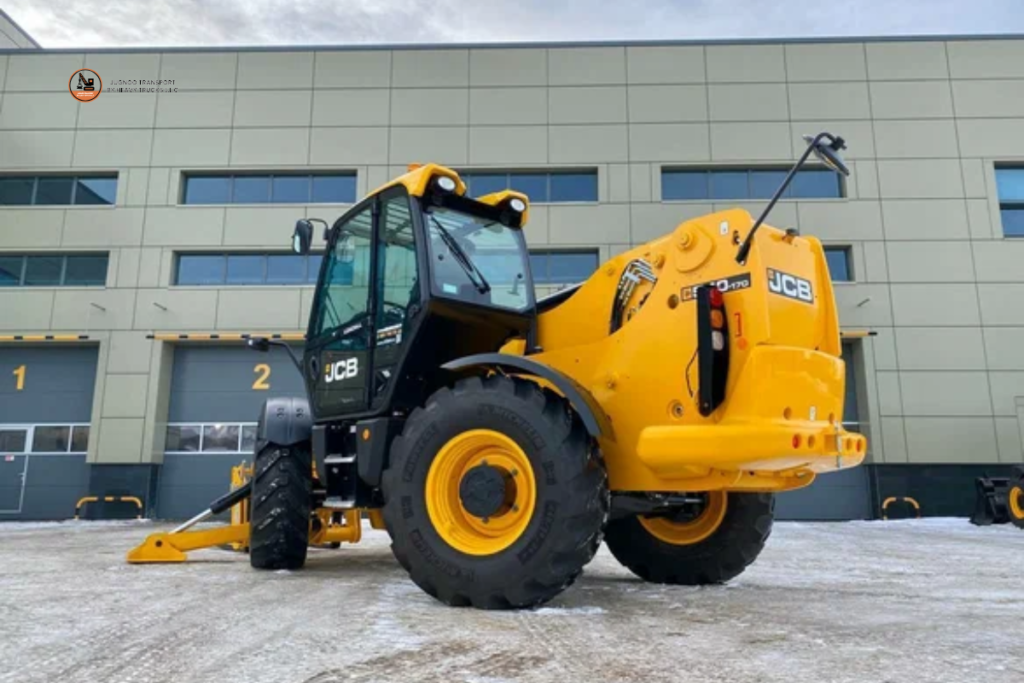
JCB boom loader 540 170 is a powerful telehandler offering high lifting capacity, durability, and efficient performance for construction and industrial work.
Welcome to another detailed from the team at Jugnoo Transport, where we don’t just move heavy machinery—we live and breathe it. Today, we’re diving deep into a true workhorse of the construction, agriculture, and logistics industries: the JCB 540-170 telescopic handler. Often called a boom loader or telehandler, this machine is a game-changer for lifting and placing loads with precision and power. Whether you’re a site manager, an operator, or just fascinated by powerful equipment, understanding this machine’s technical details and working capacity is key to unlocking its full potential—safely and efficiently.
Let’s unpack everything you need to know, from its robust engine to the critical importance of its JCB 540-170 load chart.
What Exactly is a JCB 540-170 Telescopic Handler?
Before we get into the nitty-gritty, let’s set the stage. A telescopic handler is like a super-powered forklift with an extendable boom. This gives it incredible reach and versatility. The JCB 540-170 telescopic handler is a specific model renowned for its perfect balance of strength, reach, and maneuverability. The numbers 540 and 170 tell part of the story: it can lift up to 4000 kg (approximately 4.4 US tons) and has a maximum lift height of over 17 meters (about 56 feet). It’s the Swiss Army knife of the worksite, capable of tasks from stacking pallets in a warehouse to placing roof trusses on a building.
At Jugnoo Transport, we’ve seen firsthand how this model becomes the backbone of efficient operations on countless projects. Its reliability is why we’re experts in handling its transportation with the care it deserves.
The Heart of the Beast: JCB 540-170 Engine Details
Performance starts under the hood. The JCB 540-170 engine details reveal a commitment to power, efficiency, and meeting modern emissions standards.
- Power Source: It’s powered by a robust JCB by Kohler diesel engine. Diesel is the standard for this kind of equipment due to its high torque—perfect for lifting heavy loads and handling tough terrain.
- Horsepower & Torque: This engine typically delivers around 125 horsepower. While horsepower gets the headlines, torque is the real hero here. It’s the twisting force that allows the machine to lift massive loads smoothly from a standstill. This ample torque ensures the 540-170 doesn’t struggle, even when the hydraulics are under full strain.
- Emission Compliance: Modern units are equipped with advanced emissions control systems (like Selective Catalytic Reduction or SCR) to meet stringent Tier 4 Final/Stage V regulations. This means they work cleaner without sacrificing an ounce of power. For operators, this often means a Diesel Exhaust Fluid (DEF) tank is part of the system—a small step for a big environmental benefit.
- Cooling & Durability: A large, efficient cooling system is vital. It keeps the engine and hydraulics at optimal temperatures during long, demanding work cycles. This engineering focus on durability is a hallmark of JCB and a key reason for the machine’s legendary longevity.
In simple terms, the engine is built to work hard all day, every day, providing consistent and reliable power to every part of the machine. It’s this dependable heart that makes the 540-170 a trusted partner on sites worldwide.
Understanding Its Muscle: Working Capacity and the Vital JCB 540-170 Load Chart
This is the most critical section for both safety and productivity. The working capacity of a telehandler isn’t a single, simple number. It changes dynamically based on two key factors: the load’s weight and the boom’s position.
This is where the JCB 540-170 load chart becomes your bible. Ignoring it is not just unprofessional—it’s dangerously negligent.
What is a Load Chart?
Think of it as the machine’s capability map. It’s a table, usually found on a decal inside the cab, that shows exactly how much weight you can safely lift at various boom angles and extensions. As you reach further out (extend the boom) or lift the boom from a high angle to a more horizontal position, the safe working load decreases.
Key Capacity Points of the JCB 540-170:
- Maximum Lift Capacity: Up to 4000 kg (at specific load centers and boom positions).
- Maximum Lift Height: Over 17 meters to the fork pin.
- Maximum Forward Reach: A truly impressive capability to place loads far in front of the machine, which is its superpower over a standard forklift.
Why the Load Chart is Non-Negotiable:
Let’s be clear: Overloading the Boom based on a guess or a it felt fine last time attitude is a direct path to disaster. The boom and its hydraulic rams are engineered for specific stress limits. Exceeding these limits can cause catastrophic structural failure, dropping the load and potentially rolling the entire machine. The load chart is your scientific guide to staying within these engineered limits.
At Jugnoo Transport, safety is our core value, both on the road and when we advise our clients. We urge every operator and site supervisor to make the load chart the first point of reference for every single lift.
Operational Excellence: Maximizing Your 540-170’s Potential
Knowing the specs is one thing; operating it smartly is another. Here’s how to get the best from your machine.
- Pre-Operation Checks: A quick walk-around to check tires, fluid levels, forks, and the condition of the boom is essential. A minute of prevention saves hours of downtime.
- Mastering the Controls: Modern 540-170s feature intuitive joystick controls, often with pattern-select options. Smooth operation protects the load, the machine, and the surrounding area.
- Using the Right Attachments: The true versatility comes from attachments: forks, buckets, jibs, or crane hooks. Always remember that adding an attachment changes the machine’s dynamics and capacity. You must refer to a new load chart that accounts for the attachment’s weight and geometry.
- Stability is Everything: The machine has a sturdy chassis and often outriggers or a levelling system. Always ensure it’s on a firm, level surface before attempting a lift. We’ll talk more about terrain dangers shortly.
Confronting the Big Four: Critical Safety Hazards to Avoid
Even the best machine is only as safe as its operator and work environment. Here are the four major hazards that demand constant vigilance.
- Overloading the Boom, Ignoring the Load Chart
We’ve touched on this, but it bears repeating. Overloading the Boom is the cardinal sin of telehandler operation. The temptation to lift just that little bit more or to extend just a little further is immense. The load chart is your absolute authority. It accounts for the complex physics of leverage and structural stress. Respecting it prevents tip-overs, boom failure, and tragic accidents. Make checking it a non-negotiable habit.
- Operating on Unstable Ground
This is a silent killer. Operating on Unstable Ground—be it soft soil, a steep slope, or near a trench edge—dramatically compromises the machine’s stability. The center of gravity shifts, and even a load within the chart’s limits can become dangerous. Always assess the ground conditions. Use outriggers if fitted, and if in doubt, don’t lift. Move the machine to a stable, prepared position first.
- Poor Visibility and Blind Spots
The JCB 540-170 telescopic handler is a large machine with significant Poor Visibility and Blind Spots, especially to the rear and directly in front of the lowered boom. When the boom is extended forward, it can completely obscure the operator’s view of the load and the area ahead.
- Mitigation Strategies: Always use a trained banksman or spotter when traveling with a load or in congested areas. Travel with the load low and carried backward for better visibility. Make full use of mirrors and, if available, rear-view cameras. Never rely solely on mirrors when reversing. Stop, look, and communicate.
- Complacency with Height and Reach
The 540-170 makes it easy to place loads at great heights and distances. This can lead to complacency regarding overhead hazards like power lines, scaffolding, or roof edges. Always maintain a safe distance from power lines (treat all as live!). Be acutely aware of what is above and around the load path.
Why the JCB 540-170 is a Smart Investment
Beyond the raw specs, what makes this model stand out?
- Versatility: It replaces multiple machines, saving on fleet costs.
- Site Accessibility: Its relatively compact footprint and maneuverability allow it to work in spaces where a crane cannot.
- Operator Comfort: The cab is designed for all-day productivity with excellent controls, visibility (when managed correctly), and reduced noise and vibration.
- Serviceability: JCB designs for easy maintenance, with grouped service points and accessible components, minimizing downtime.
For a business, this translates to lower operational costs, higher productivity, and greater job versatility.
Jugnoo Transport: Your Partner in Power and Precision
You might wonder why a transport company is so passionate about machine specifications and safety. At Jugnoo Transport, we believe that truly professional service goes beyond just moving an item from A to B. It’s about understanding what we’re handling inside and out.
When you trust us with transporting your JCB 540-170 telescopic handler or any other critical equipment, you’re getting more than a driver with a trailer. You’re getting a partner who:
- Understands the Machine: We know its weight, dimensions, and critical points for securement because we’ve studied the JCB 540-170 engine details and its full structure.
- Prioritizes Damage-Free Transport: We use specialized trailers, correct loading ramps, and expert tie-down techniques that respect the machine’s chassis and components.
- Values Your Uptime: We coordinate efficient, on-time deliveries so your powerful machine—whether it’s a 540-170 or another model—gets to your site ready to work, not needing repairs from a bumpy journey.
- Shares Your Safety Focus: Our commitment to safe practices on the road mirrors the safety culture you need on your site. We get it.
We see ourselves as a vital link in your supply chain, enabling your productivity by ensuring your key assets arrive safely, securely, and on schedule.
Conclusion: Knowledge Drives Performance
The JCB 540-170 telescopic handler is a masterpiece of engineering, blending immense power with precise control. Fully understanding its technical details and working capacity—from the robust JCB 540-170 engine details to the sacred JCB 540-170 load chart—is what separates good operators from great ones.
By actively combating the major hazards of Overloading the Boom, Ignoring the Load Chart, Operating on Unstable Ground, and navigating Poor Visibility and Blind Spots, you create a culture of safety that protects your people, your project, and your investment.
Whether you’re looking to purchase your first 540-170, adding one to your fleet, or need to move one across the country, remember that mastery comes from respecting the machine’s design and limits. And when it comes to the crucial job of transporting your valuable equipment, know that Jugnoo Transport is here, equipped with the knowledge and dedication to handle it with the expertise it deserves.
Let’s build, lift, and move forward—safely and efficiently, together.