
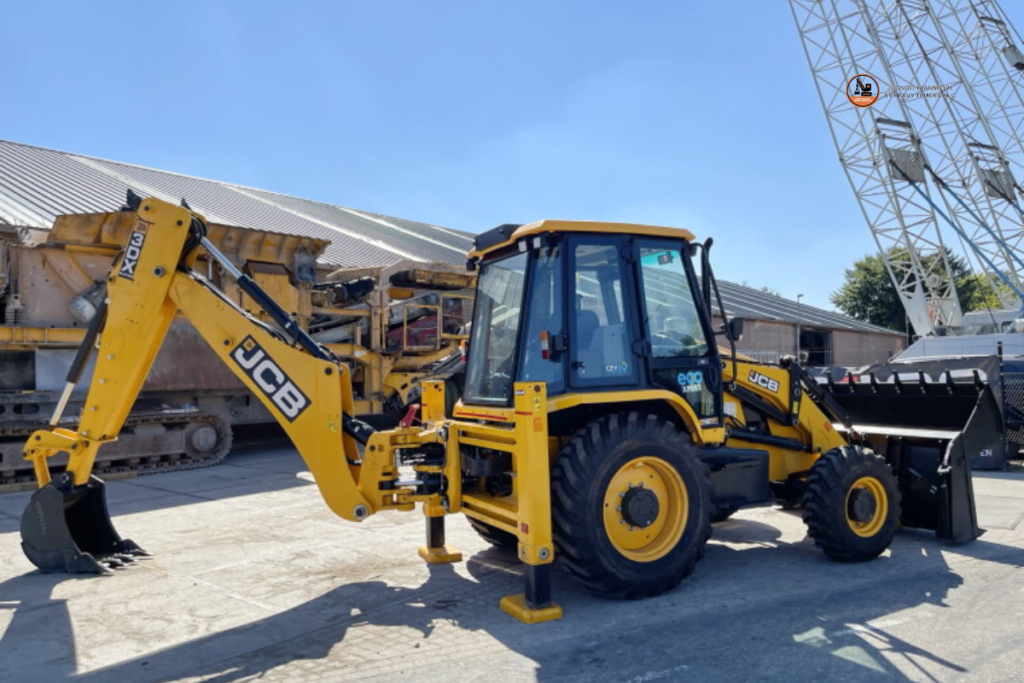
Looking for a JCB boom loader rental? Jugnoo Transport offers top-tier machines with massive lifting power. Learn about jcb boom loader specifications, safe operation, and why we are the right choice for your project.
The world of construction and material handling moves fast. To keep up, you need equipment that is not only powerful but also reliable, safe, and versatile. When it comes to moving heavy materials from point A to point B—especially over rough terrain or to high places—few machines can match the prowess of a JCB boom loader.
At Jugnoo Transport, we have built our reputation on providing exactly this kind of high-quality, high-performance machinery to projects across the region. Whether you are lifting pallets of bricks to the top of a scaffold or loading heavy machinery onto a truck, having the right equipment is the difference between a smooth operation and a costly delay.
We will dive deep into the world of high-capacity JCB boom loaders. We will explore their capabilities, discuss the technical jcb boom loader specifications that make them industry leaders, and most importantly, talk about how to operate them safely. And when you need a machine you can trust, remember that Jugnoo Transport is just a call away.
What is a JCB Boom Loader? A Versatile Powerhouse
Before we get into the numbers, let’s clarify what we mean by a boom loader. While JCB is famous for its backhoe loaders, the machines we are focusing on here are often referred to as Telescopic Handlers, or Telehandlers for short. However, in the common language of many job sites, they are simply called boom loaders because of their extending boom.
Imagine a forklift that can drive over mud and rocks like a 4×4. Now, imagine that the mast of the forklift can extend forward and upward like a crane. That is your JCB boom loader. It consists of a wheeled chassis, an engine, and a hydraulically powered telescopic boom that can fit various attachments—most commonly forks, but also buckets, winches, and lifting hooks.
Why Choose a Boom Loader?
- Reach: They can lift materials to heights and distances that a standard forklift cannot.
- Rough Terrain Capability: Unlike forklifts that need smooth pavement, JCB boom loaders are built to navigate muddy construction sites with ease.
- Versatility: By swapping the attachment at the end of the boom, the same machine can unload a truck, lift a worker in a basket, and then dig a trench.
At Jugnoo Transport, our fleet is built around this versatility. We understand that no two jobs are the same, which is why we offer a range of machines tailored to your specific lifting needs.
The Anatomy of High Lifting Capacity
When we talk about a high lifting capacity, we aren’t just talking about the machine’s ability to pick up something heavy. We are talking about its ability to do so safely and efficiently, especially when that load is lifted high into the air or extended far forward.
Understanding the Numbers
Jcb boom loader capacity is not a single number. It is a variable figure that changes based on how the machine is configured. This is the most critical concept for any operator or site supervisor to understand. You will typically see capacity referenced in three ways:
- Maximum Lift Capacity: This is the heaviest weight the machine can lift. However, this is usually only achievable when the boom is fully retracted (in its lowest and most stable position) and the load is close to the machine. For example, a mid-size model might have a maximum capacity of 5,000 kg (5 tons).
- Capacity at Full Height: This tells you how much weight the machine can handle when the boom is raised to its maximum vertical height. The number is usually lower than the maximum capacity due to leverage and stability concerns. For instance, a machine might lift 5 tons close to the ground, but only 3 tons when raised 8 meters high.
- Capacity at Full Reach: This is often the lowest capacity figure. It refers to how much weight the machine can lift when the boom is fully extended horizontally. This is the most challenging position for the machine because the load is far away from the machine’s center of gravity. A machine might only handle 1,000 kg at full forward reach .
Understanding these distinctions is vital for planning lifts and ensuring site safety.
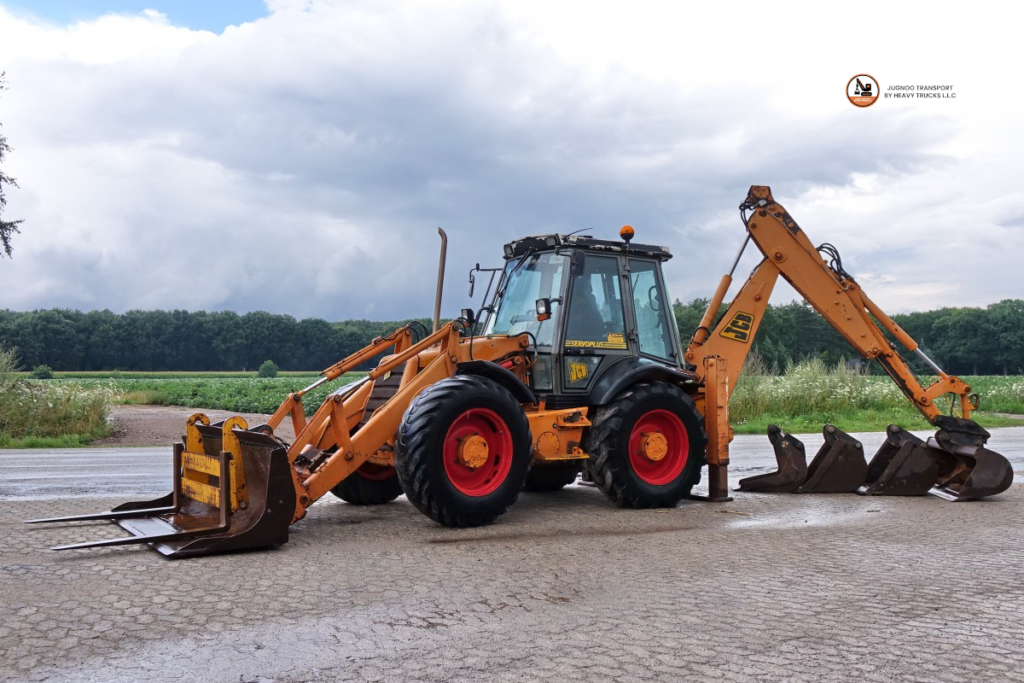
JCB Boom Loader Specifications: What the Numbers Mean
When you are looking for a jcb boom loader rental, you will be presented with a list of specifications. At Jugnoo Transport, we believe in educating our clients so they can choose the perfect tool for the job. Let’s break down the key specs you need to look for.
Engine Power and Transmission
The heart of any JCB machine is its engine. Modern JCB boom loaders often feature JCB’s proven DieselMAX engines. These engines are designed to deliver high torque at low RPMs, which is perfect for lifting heavy loads without guzzling fuel.
- Power Output: Ranges from around 100 hp to over 130 hp depending on the model .
- Transmission: Look for features like Powershift transmissions with multiple speeds. This allows the operator to shift gears smoothly under load, which is essential when moving materials around a site. Some advanced models feature TorqueLock technology, which acts like a cruise control for the drivetrain, improving fuel efficiency during travel .
Lift Height and Reach
This is the defining characteristic of a boom loader.
- Maximum Lift Height: Depending on the model, this can range from 5 meters to over 8 meters. This allows you to easily place materials onto high scaffolding, load tall highway trucks, or stack bales in a warehouse .
- Maximum Forward Reach: When you need to place a load over an obstacle or into the middle of a trailer without moving the machine, forward reach is key. High-capacity models can offer a forward reach of nearly 3 meters or more .
Chassis and Stability
- Operating Weight: A heavier machine is generally more stable. These machines can weigh anywhere from 8,000 kg to over 12,000 kg. This weight provides the counterbalance needed to lift heavy loads safely .
- 4-Wheel Drive (4WD): Almost all high-capacity JCB boom loaders come with 4WD and limited-slip differentials. This ensures that even if one wheel starts to slip in the mud, the others keep pushing, giving you the traction needed on uneven ground .
- Axles: Heavy-duty axles are designed to absorb the shocks of traveling over rough terrain while carrying a load.
Hydraulics
The boom is moved by a powerful hydraulic system.
- Load-Sensing Hydraulics: Modern JCB machines use load-sensing hydraulics. This means the system only uses the engine power needed to complete the task, rather than running at full pressure all the time. This saves fuel and reduces wear on the system .
- Auxiliary Hydraulics: This allows the operator to power different attachments, like a bucket or a grapple, directly from the cab.
Real-World Applications of High-Capacity Boom Loaders
Why would you need a machine with a high lifting capacity? At Jugnoo Transport, we see our machines used in a variety of demanding situations every day.
Construction and Masonry
On a typical building site, a JCB boom loader is the workhorse. It unloads pallets of blocks, bricks, and mortar from delivery trucks. It then transports those materials across muddy, rutted ground directly to the spot where the masons are working. With a high-capacity machine, you can carry more materials in a single trip, reducing the number of trips and saving time.
Agriculture
In farming, these machines are indispensable. They lift heavy bales of hay or silage, load grain into hoppers, and handle bulk bags of feed. The ability to reach high into barns or over the sides of livestock feeders makes them far more useful than a standard tractor and loader.
Industrial and Warehousing
While warehouses often use electric forklifts indoors, the outdoor yard is the domain of the boom loader. They are used for loading and unloading heavy machinery, placing large HVAC units onto rooftops, and handling scrap metal in recycling yards. The jcb boom loader capacity allows them to handle dense, heavy industrial loads that would overwhelm smaller equipment.
The Crucial Safety Guide: Avoiding Common Mistakes
Operating a boom loader is a skill. While these machines are engineered for stability, they are subject to the laws of physics. At Jugnoo Transport, we prioritize safety above all else. We not only provide the machine but also ensure our rental clients understand the risks. Here are the four most critical hazards to avoid.
Overloading the Boom
This is the number one cause of boom loader accidents. It occurs when an operator tries to lift a load that is too heavy for the current boom position.
As we discussed earlier, capacity changes as the boom moves. A load that is perfectly safe close to the ground becomes a deadly risk when lifted high or reached out far.
- The Consequence: Overloading the boom can cause the machine to tip forward or sideways. It can also cause structural damage to the boom itself, leading to catastrophic failure later on. The warning in the JCB manual is stark: You or others can be killed or seriously injured if you operate the control levers from outside the machine, and this is especially true when the machine is unstable due to overloading .
- How to Avoid It: Always know the weight of your load. If you are unsure, do not lift it. Lift the load just a few centimeters off the ground first to test the machine’s stability. If the rear wheels lift off the ground, lower the load immediately .
Ignoring the Load Chart
Every JCB boom loader comes with a Load Chart located in the cab. This is not a suggestion; it is the machine’s operating manual for safe lifting.
- The Mistake: An experienced operator might think they know the machine and guess the safe lifting zone. This is a dangerous gamble. Ignoring the Load Chart is effectively ignoring the engineering data that keeps the machine upright.
- How to Use It: The load chart is a graph. You find your boom’s height and reach on the chart, and it tells you the maximum safe weight for that specific configuration. Factors like whether the machine is on tires or stabilizers (if equipped) also change the chart. Do not exceed the loading limits shown on the Load Charts is a primary rule of safe operation .
Operating on Unstable Ground
A boom loader is stable when it is on firm, level ground. Unfortunately, job sites are rarely perfect.
- The Hazard: Operating on unstable ground—such as soft mud, freshly backfilled trenches, or steep slopes—dramatically increases the risk of tipping. The machine could sink on one side, or a hidden rut could cause it to lurch suddenly. The manual clearly states that Loading and unloading on soft or uneven ground can be hazardous. The machine could tip over and you could be killed or injured . Furthermore, traveling across a slope is far more dangerous than traveling straight up or down it .
- How to Avoid It: Inspect your travel path before moving a heavy load. Stick to firm, compacted surfaces. When working on a slope, keep the load on the uphill side of the machine. If the ground looks suspect, find another route or have it compacted first.
Poor Visibility and Blind Spots
The design of a boom loader, with a load carried out in front, creates significant visibility challenges.
- The Danger: A raised boom or a bulky load can completely block the operator’s view of the ground directly in front of the machine. This is where Poor Visibility and Blind Spots become deadly. An operator might not see a worker on foot, a deep hole, or a stack of materials. The JCB manual warns that A high load can block your view and reduce the machine’s stability. Travel with the load low to the ground .
How to Avoid It:
- Travel Low: When moving with a load, always keep the boom retracted and the forks as low to the ground as possible (just high enough to clear bumps).
- Use a Spotter: If your view is blocked, stop immediately. Do not move until a signal person (spotter) is in a safe, visible position and can guide you. Seek assistance if forward vision is obscured by a bulky load .
- Know Your Equipment: Modern JCB cabs are designed to maximize visibility, with curved glass and slim pillars, but they cannot eliminate all blind spots .
Why Choose Jugnoo Transport for Your JCB Boom Loader Rental?
Now that you understand the power and complexity of these machines, you need a partner who can provide not just the equipment, but the expertise and support to get the job done right. That partner is Jugnoo Transport.
A Modern, Well-Maintained Fleet
When you opt for a jcb boom loader rental from Jugnoo Transport, you aren’t getting a worn-out, unreliable machine. We pride ourselves on maintaining a fleet of late-model JCB loaders. We know that downtime costs you money, so every machine undergoes rigorous servicing and safety checks before it leaves our yard.
The Right Machine for the Job
Choosing the right machine can be confusing with all the jcb boom loader specifications out there. Do you need the height? The raw power? Our team takes the time to consult with you. We ask about your materials, your terrain, and your lift heights to match you with the perfect machine for your specific project requirements.
We Deliver and Support
Time is money. We offer flexible rental periods and efficient delivery services to get the machine to your site when you need it. And our support doesn’t end when the machine rolls off the truck. We are just a phone call away if you have any operational questions or encounter any issues on-site.
Safety-First Approach
As we’ve discussed extensively, safety is paramount. We don’t just hand you the keys; we provide a thorough handover. We will walk you through the specific jcb boom loader capacity of that machine, point out the load chart, and ensure your operator is comfortable with the controls. By partnering with us, you are building a safer job site.
Pre-Operation Checks: A Routine for Safety
Before the engine even starts, a professional operator follows a checklist. If you are renting from Jugnoo Transport, here are a few things you should make a habit of checking every day:
- Visual Inspection: Walk around the machine. Look for any leaks (oil, hydraulic fluid, coolant), check for damaged hoses, and ensure all lights and warning beacons are clean and functional.
- Tyre Condition and Pressure: This is critical. Uneven tyre pressure affects the machine’s stability. Check for cuts, embedded objects, or signs of damage. Maintain correct tyre pressures to avoid upsetting the lateral stability of the machine. Inspect tyres daily for signs of damage .
- Check the Area: Look at the ground where you will be working. Is it solid? Are there overhead power lines that the boom could strike? Are there any holes or soft spots? Check the site carefully before starting any lifting operation .
- Function Tests: Once in the cab, test all the controls. Cycle the boom up and down, extend and retract it, and test the steering and brakes in a safe, clear area.
The Future of Lifting: Innovation at JCB
JCB continues to innovate, making their machines safer, more efficient, and more capable. Features you might find on newer models include:
- JCB LiveLink: This is a telematics system that allows fleet managers (and rental companies like Jugnoo Transport) to track the machine’s location, health, and performance. It can alert us to potential issues before they cause a breakdown, ensuring maximum uptime for you .
- Smoothride System (SRS): When traveling with a load across rough ground, the boom can bounce. SRS is a suspension system that dampens this bounce, improving load retention (stopping things from falling off the forks) and operator comfort .
- Improved Cab Design: JCB continuously improves cab visibility and comfort. Features like advanced HVAC systems, air-suspension seats, and intuitive joystick controls reduce operator fatigue, which in turn reduces the chance of errors caused by tiredness .
Conclusion: Power, Performance, and Partnership
A JCB boom loader with high lifting capacity is more than just a piece of heavy equipment; it is a productivity multiplier. It allows one person and one machine to do the work of several, moving materials faster and safer than ever before. However, with this great power comes great responsibility.
Understanding the jcb boom loader specifications ensures you choose the right tool. Respecting the jcb boom loader capacity and following safe operating procedures—like never ignoring the load chart and avoiding operating on unstable ground—ensures everyone goes home safe at the end of the day. And recognizing the dangers of overloading the boom and navigating poor visibility and blind spots is the mark of a true professional.
At Jugnoo Transport, we are committed to providing you with the best possible equipment and the knowledge to use it effectively. We don’t just rent machines; we build partnerships to help you build your projects.Whether you need a machine for a day, a week, or a month, contact Jugnoo Transport today. Let us provide the lifting power so you can focus on the job at hand.