

The Largest Mobile Crane offers extreme lifting capacity, advanced hydraulics, and unmatched performance for large construction sites.
In the world of construction and heavy industry, few sights are as awe-inspiring as a massive mobile crane at work. These mechanical giants are the backbone of modern infrastructure, capable of placing a 1,000-ton reactor on a refinery skid or lifting a bridge section into place hundreds of feet in the air. And more importantly, how does that incredible power and sophisticated design translate into a successful, safe lift on your project? This is where understanding the machinery intersects with the expertise of a premier heavy transport and lifting partner like Jugnoo Transport.
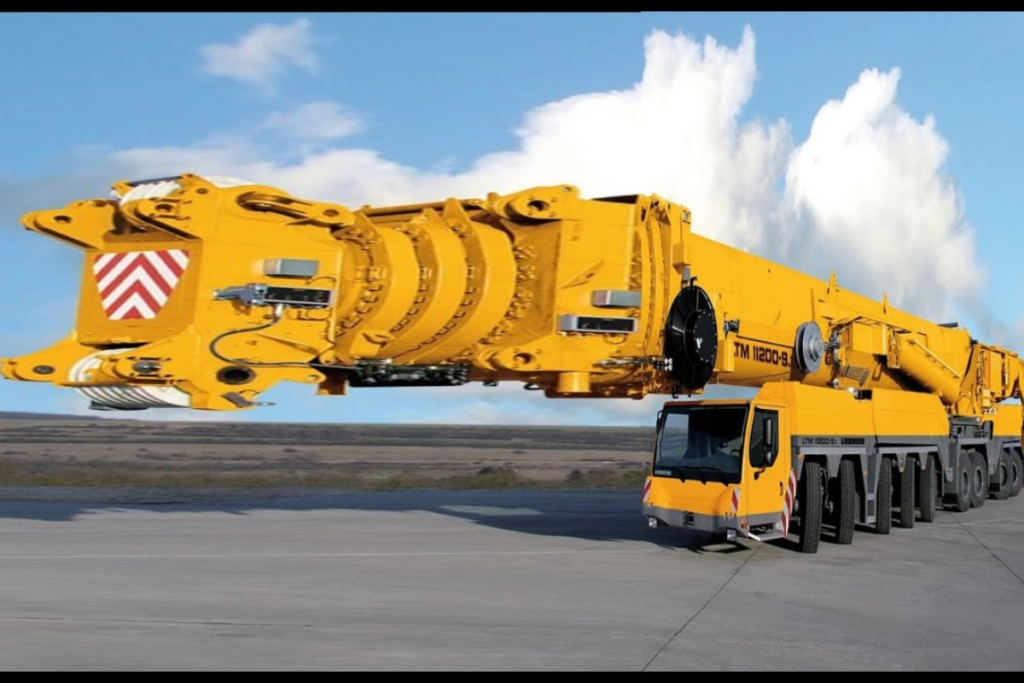
Today, we’re diving deep into the world of these titans. We’ll unpack the engineering behind their largest mobile crane capacity, explore the design marvels of the largest telescopic mobile crane, and break down the critical largest mobile crane specifications. But we’ll also go beyond the numbers, because true power is meaningless without precision and safety.
What Makes a Mobile Crane The Largest?
When we talk about the largest, it’s not just about physical size. It’s a combination of key factors:
- Lifting Capacity: The maximum weight it can lift, often referred to as the largest Mobile Crane capacity. This is the headline number, sometimes exceeding 1,200 metric tons.
- Reach: How far and how high the boom can extend. A crane might have immense power but needs the reach to place the load where it needs to go.
- Mobility: The ability to travel on public roads or across a site under its own power. This differentiates mobile cranes from even larger, but stationary, tower cranes.
But for a project manager or engineer, the most important crane isn’t always the absolute biggest in the world—it’s the largest and most suitable crane for the specific job, operated with flawless skill.
The Heart of the Giant: Breaking Down the Design
The design of a mega mobile crane is a symphony of mechanical, hydraulic, and structural engineering. Let’s look at its core components.
- The Carrier: The Foundation of Power
Think of the carrier as the crane’s heavy-duty truck. It’s not just for transport; it’s the stable base for all lifting operations. The carriers for the world’s largest cranes are technological marvels themselves:
- Multi-Axle Configurations: They can have 8, 9, or even more axles to distribute the immense weight of the crane and its load. Many axles are steerable, allowing these behemoths to navigate surprisingly tight corners.
- Powerful Engines: They house engines that can generate over 1,000 horsepower, necessary to move the massive structure and power the hydraulic systems.
- Self-Propelled Modular Transporters (SPMTs): For the absolute largest capacities, some cranes use a carrier built from SPMT modules. This offers unparalleled weight distribution and ground pressure management, a technology Jugnoo Transport specializes in for moving super-heavy loads.
- The Superstructure: The Crane’s Brain and Brawn
This is the rotating part of the crane that sits atop the carrier. It contains the operator’s cab, the hoist winches, and most critically, the slewing ring that allows for 360-degree rotation. The design here focuses on balancing immense strength with precise control.
Decoding the Power: Capacity, Specifications, and the Load Chart
When reviewing the largest mobile crane specifications, you’ll encounter a list of impressive but sometimes confusing numbers. Here’s what they mean:
- Maximum Capacity: The headline largest mobile crane capacity (e.g., 1,200 tons). Crucially, this capacity is almost never available at maximum radius or with the boom fully extended. It’s typically only when the load is close to the crane and the boom is at a lower angle.
- Boom Length: The maximum length the main boom can achieve, often over 100 meters. Adding a jib can extend this further.
- Radius: The horizontal distance from the center of the crane’s rotation to the hook. This is the most critical factor after weight. As the radius increases, the capacity decreases dramatically due to physics (leverage).
- Hook Height: The maximum height the hook can reach under the boom tip.
All this data comes together in one sacred document: The Load Chart.
The Load Chart is the Crane’s Rulebook.
Every crane has a unique load chart—a complex graph or table that tells the operator EXACTLY how much can be lifted at every possible boom length, radius, and configuration. There is no guesswork. At Jugnoo Transport, our lift planners and certified operators treat the load chart as the absolute authority. It factors in the crane’s structural limits, stability, and the laws of physics.
The Invisible Partner: Engineering and Site Intelligence
Operating the largest mobile cranes isn’t just about driving the machine. It’s a feat of advanced engineering that happens before the crane ever arrives on site.
- Lift Planning: Engineers create a detailed plan modeling the crane, the load, the pick-and-place points, and every movement in between. They determine the exact crane configuration needed.
- Ground Pressure Analysis: A crane weighing hundreds of tons exerts tremendous pressure on the ground. Engineers must calculate this and ensure the site is prepared, often with steel plates or reinforced mats, to create a stable, level platform. Operating on Unstable Ground is one of the most dangerous mistakes possible, leading to catastrophic tipping.
- Computer-Aided Control: Modern large cranes are equipped with sophisticated computer systems (Like LICCON or similar). These systems monitor all parameters—weight on hook, radius, boom angle, wind speed—and will prevent unsafe movements, acting as a critical backup to the operator’s skill.
The Human Element: Skill, Safety, and Mitigating Risk
The most advanced crane is only as good as its crew. Safe operation hinges on unparalleled skill and constant vigilance against common hazards.
- The Peril of Overloading the Boom
This is a direct path to structural failure. The boom is designed to handle specific bending forces. Overloading the Boom, even slightly, can cause it to buckle catastrophically. This is why strict adherence to the load chart, verified by on-board computers, is paramount. At Jugnoo Transport, our culture is built on safety first, which means never compromising on load limits.
- The Absolute Necessity of Stable Ground
We mentioned it from an engineering standpoint, but it bears repeating from an operational view. Operating on Unstable Ground—be it soft soil, backfill, or near excavations—compromises the crane’s entire foundation. Outriggers can sink, the carrier can tilt, and stability is lost. Our site assessment is a rigorous first step in every project we undertake.
- Conquering the Challenge of Poor Visibility and Blind Spots
The operator sits in a cab, often dozens of meters high. While the view is great, there are significant blind spots, especially directly below and around the carrier. Poor Visibility from weather, dust, or night work compounds this risk. Mitigation is multi-layered:
- A Team of Spotters: Certified signal persons are the operator’s eyes on the ground, using hand signals and radios to guide movements.
- Camera Systems: Many large cranes are now equipped with 360-degree camera systems, giving the operator a bird’s-eye view of the entire site.
- Clear Communication: A standardized, fail-safe communication protocol is non-negotiable on a Jugnoo Transport site.
Why Partnering with an Expert Like Jugnoo Transport Makes All the Difference
Choosing to hire a crane, especially one of the largest class, is about much more than renting a piece of equipment. It’s about procuring a complete lifting solution. This is where Jugnoo Transport stands apart.
We don’t just provide a crane; we provide certainty. Our process ensures that every aspect of the largest mobile crane specifications is perfectly aligned with your project’s needs.
- Precision Equipment Selection: With our extensive fleet and industry partnerships, we select the optimal crane. We ask: Do we need the largest telescopic Mobile Crane for quick setup and versatility, or a lattice boom crane for extreme height? We analyze the largest mobile crane capacity needed not just for the initial pick, but for the full planned movement.
- End-to-End Project Management: From the initial site survey and ground preparation to engineering, permitting, execution, and demobilization, Jugnoo Transport manages it all. We handle the complexities so you can focus on your project timeline.
- Unmatched Expertise: Our team consists of veteran project managers, certified master riggers, and crane operators with decades of experience. They understand the physics, the machinery, and the real-world challenges of a complex lift.
- A Safety Culture That Never Sleeps: For us, safety isn’t a checklist; it’s the foundation of our business.
Conclusion: The Symphony of Scale and Precision
The world’s largest mobile cranes are undeniable testaments to human engineering. Their largest mobile crane capacity figures capture headlines, and their largest Mobile Crane specifications fill datasheets.
They remind us that true capability is the marriage of scale and precision. It’s about having the strength to lift a thousand tons and the finesse to place it within millimeters.
For your next project that demands more than just equipment—that demands a guarantee of safety, efficiency, and success—look to a partner who understands this balance intrinsically. Look to Jugnoo Transport. Let’s discuss how we can bring our engineering mindset and operational excellence to lift your next big idea, safely and seamlessly off the ground.