
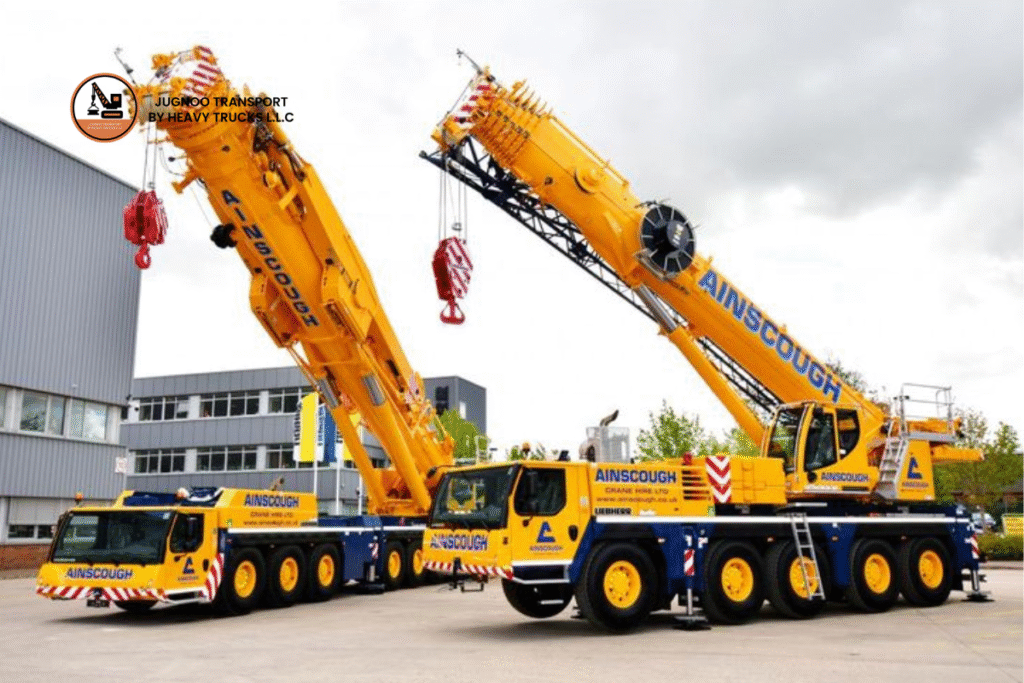
Essential material shifting crane safety protocols. Ensure operational efficiency and worksite safety with proper handling and hazard prevention.
In the fast-paced world of construction, manufacturing, and logistics, cranes are the silent giants that keep projects moving. Indeed, they lift, shift, and place heavy materials with awe-inspiring power. However, efficient crane use isn’t just about speed; rather, it’s about the meticulous integration of knowledge, preparation, and procedure to ensure every lift is completed without incident.
At Jugnoo Transport, we believe that safety is the ultimate efficiency. Therefore, every successful project begins with a commitment to the protocols that protect people, property, and progress. Consequently, this guide will walk you through the essential safety protocols for using a material shifting crane, explained in simple, actionable terms.
Why Safety Protocols Aren’t Just “Red Tape”
Safety protocols are often seen as hurdles that slow work down. In reality, they are the very foundation of true efficiency. To illustrate, an accident can cause injuries, damage costly equipment and materials, lead to massive project delays, and incur severe financial and legal penalties. Ultimately, a safe site is a productive site.
The Pillars of Safe Crane Operation
Safe crane operation rests on five core pillars:
- Thorough Planning & Risk Assessment
- Competent & Certified Personnel
- Meticulous Equipment Inspection
- Clear & Unbroken Communication
- A Culture of Shared Responsibility
Now, let’s break down each pillar into the practical protocols you need to implement.
Pillar 1: Meticulous Planning – The Blueprint for Safety
You wouldn’t start a journey without a map. Similarly, you should never start a lift without a comprehensive lift plan.
1.1. Understanding the Load
- Weight: This is non-negotiable. Specifically, you must know the exact weight of the load, since guessing is a recipe for disaster. Therefore, consult shipping documents, design plans, or use scales.
- Dimensions & Center of Gravity: How big is it? More importantly, where is its weight concentrated? Otherwise, an off-center load can become unstable very quickly.
- Nature of the Load: Is it fragile, hazardous, or oddly shaped? Additionally, does it require special rigging or handling?
1.2. Consulting the Load Capacity Chart
This is the crane’s bible. Essentially, it tells you exactly what the crane can lift at different boom lengths, angles, and radii. Here’s the critical part: The load chart is specific to the crane’s configuration. As a result, the operator must:
- Identify the exact crane model and configuration.
- Determine the lift radius (distance from the crane’s center to the load).
- Refer to the chart to find the safe working load for that specific setup.
Most importantly, NEVER, EVER EXCEED THE CAPACITY. Remember, it’s designed to account for unseen variables.
Pillar 2: Competent Personnel – The Human Element
The best equipment is only as good as the people using it. Therefore, key roles must be filled by trained, qualified individuals.
2.1. Operator Certification: The Non-Negotiable
The crane Operator Certification is paramount. Specifically, a certified operator has undergone rigorous training and testing to prove they can safely operate specific types of cranes. Furthermore, they understand the machine’s mechanics, the load chart, and how to respond to dynamic conditions. Thus, always verify that your operator’s certification is current and appropriate for the crane being used.
2.2. The Signal Person (Rigger)
Often, the operator cannot see the load. Therefore, they rely entirely on the signal person. Accordingly, this person must:
- Be trained in standard hand signals (as per OSHA or relevant authority) or use clear radio communication.
- Have a clear view of the load, the operator, and the path.
- Be the sole point of contact for instructions to the operator (except for stop signals, which anyone should be able to give).
2.3. The Lift Director
For larger operations, a lift director oversees the entire process. In this role, they ensure the plan is followed, coordinate all personnel, and have the authority to stop the lift if conditions change.
2.4. The Rigging Crew
Similarly, those responsible for attaching the load must be trained in the selection, inspection, and use of Rigging Equipment. For example, they must understand hitch types (e.g., choke, basket) and how to protect the load from damage.
Pillar 3: Equipment Integrity – Trust, but Inspect
This pillar focuses on the physical tools of the job: namely, the crane and all associated gear.
3.1. The Pre-lift Inspection: A Daily Ritual
It includes:
- Crane Structure: Check for cracks, corrosion, or damage in the boom, jib, outriggers, and base.
- Wire Rope & Sheaves: Look for broken wires, kinks, crushing, or excessive wear. Additionally, ensure ropes are properly seated in sheaves (grooved wheels).
- Hydraulics & Mechanics: Check for leaks, hose integrity, and proper fluid levels.
- Controls & Safety Devices: Test all operational controls. Also, ensure safety devices like load moment indicators (LMI), anti-two-block systems, and boom angle indicators are functional.
- Tires/Outriggers: Inspect tire pressure and condition. Finally, check outrigger pads and beams for damage.
3.2. Rigging Equipment Inspection
Likewise, every piece of Rigging Equipment must be inspected before each use:
- Slings (Wire Rope, Chain, Synthetic): Look for cuts, abrasions, broken wires, distorted links, or chemical damage. If any are found, tag and remove any defective sling from service immediately.
- Shackles, Hooks, and Clamps: Check for deformation, cracks, or excessive wear at bearing points. Also, ensure safety latches on hooks are present and functional.
- Spreader Beams/Lifting Beams: Inspect for straightness and integrity.
In summary, using faulty rigging is an immense risk.
Pillar 4: Clear Communication – The Lifeline
Miscommunication on a crane site can be catastrophic. Therefore, establishing and maintaining clear Signal Communication is the lifeline of the operation.
4.1. Establishing the Method
Before the lift, the operator and signal person must agree on the method:
- Standardized Hand Signals: These are universal. Therefore, both parties must know them perfectly.
- Radio Communication: Use clear, dedicated channels. Moreover, avoid casual chatter.
- A Combination: Often used, with radios for general instruction and hand signals for fine-tuning.
4.2. The “Stop” Signal
Everyone on site must know that a stop signal (a frantic waving of arms) overrides everything. Consequently, any person who sees a danger must give the stop signal.
4.3. Pre-Lift Meeting
Before starting, gather the entire crew involved. Then, review the lift plan, assign roles, discuss hand signals or radio codes, and identify potential hazards. This ensures everyone is on the same page.
Pillar 5: A Culture of Safety – Everyone’s Job
Protocols on paper are useless without a culture that values them. This means:
- Empowerment: Every worker, from the operator to the ground helper, is empowered and expected to speak up if they see something unsafe.
- No Shortcuts: Leadership must never pressure crews to bypass safety for speed.
- Continuous Learning: Regular safety talks, learning from near-misses, and staying updated on regulations.
Putting It All Together: A Step-by-Step Lift Sequence
Let’s see how these pillars come together in a typical lift:
- Planning & Briefing: The lift plan is developed. Next, the crew conducts a pre-lift meeting.
- Site Setup: The crane is positioned on stable, prepared ground. After that, outriggers are fully extended on proper pads/mats.
- Pre-lift Inspection: The operator completes the Pre-lift Inspection checklist. Simultaneously, the rigging crew inspects all Rigging Equipment.
- Rigging the Load: The rigging crew, using the correct slings and hitches, securely attaches the load. Furthermore, they ensure the load is balanced and secured.
- Final Checks: The operator re-checks the Load Capacity Chart for the exact lift radius. Meanwhile, the signal person confirms their position and readiness.
- The Lift (Communication in Action):
- Signal person: “Operator, ready for a test lift.”
- Operator: “Ready for test lift.”
- The signal person gives the “Hoist” signal to take up slack.
- The load is lifted just enough to clear the ground. Then, everything is checked—crane stability, rigging security, load balance.
- If all is good, the signal person directs the lift, swing, and placement using clear Signal Communication.
- Throughout, the operator moves slowly and smoothly, avoiding jerky movements.
- Lowering and Placement: The load is gently lowered into place. Finally, it is only detached once it is completely stable and secure.
- Post-Lift: The area is secured. Afterwards, any issues encountered are noted for future reference.
Special Considerations for Mobile Cranes
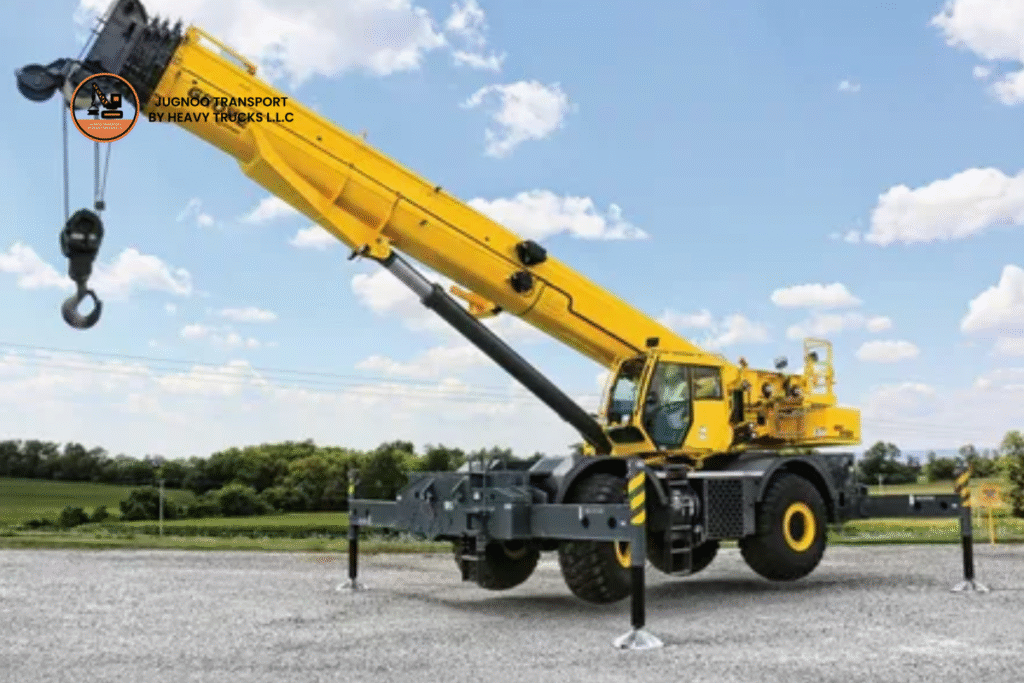
Mobile cranes, like those we specialize in at Jugnoo Transport, offer fantastic flexibility but have unique protocols:
- Travel Path: Plan the route to and from the lift position, making sure to check for overhead obstructions and ground suitability.
- Setup Time: Never rush setup. Instead, ensure outriggers are properly deployed before attempting any lift. Most importantly, the crane must be level.
- On-Rubber vs. On-Outrigger Lifts: Understand the drastic difference in capacity. Typically, most significant lifts require outriggers to be fully extended and the crane to be level.
When Things Go Wrong: Emergency Protocols
Even with perfect planning, emergencies happen. Therefore, have a plan for:
- Power Failure: Cranes have brakes that will hold the load. The protocol is to secure the area and manually lower the load if safe procedures and equipment are in place.
- Storms/High Winds: Stop operations immediately. Then, secure the crane (retract boom, lower load if safe) and evacuate if necessary.
- Electrical Contact: If the crane contacts a power line, the operator should stay inside. Conversely, personnel on the ground should stay away and warn others. Critically, only the power company can confirm the line is de-energized.
Conclusion: Safety as Your Competitive Edge
Efficient material shifting isn’t about cutting corners. On the contrary, it’s about a disciplined, professional approach where safety protocols are the engine of productivity. By investing in planning, certified personnel like those with valid Operator Certification, meticulous Pre-lift Inspection, flawless Signal Communication, and a relentless respect for the Load Capacity Chart and Rigging Equipment, you build a reputation for reliability and excellence.
This is the standard we live by at Jugnoo Transport. When you choose our mobile crane rental in Dubai, you’re not just getting a machine; instead, you’re getting a partner committed to the highest safety culture. For instance, our certified operators, our meticulously maintained fleet that undergoes rigorous daily checks, and our commitment to collaborative planning are all part of the package. Ultimately, we believe that by making safety the foundation of every lift, we help your project achieve its goals efficiently and incident-free.
Let’s build safely, together. For a crane service that values your project’s safety as much as its timeline, visit our service page to learn more about how we can support your next project: Jugnoo Transport Mobile Crane Rental Dubai.