
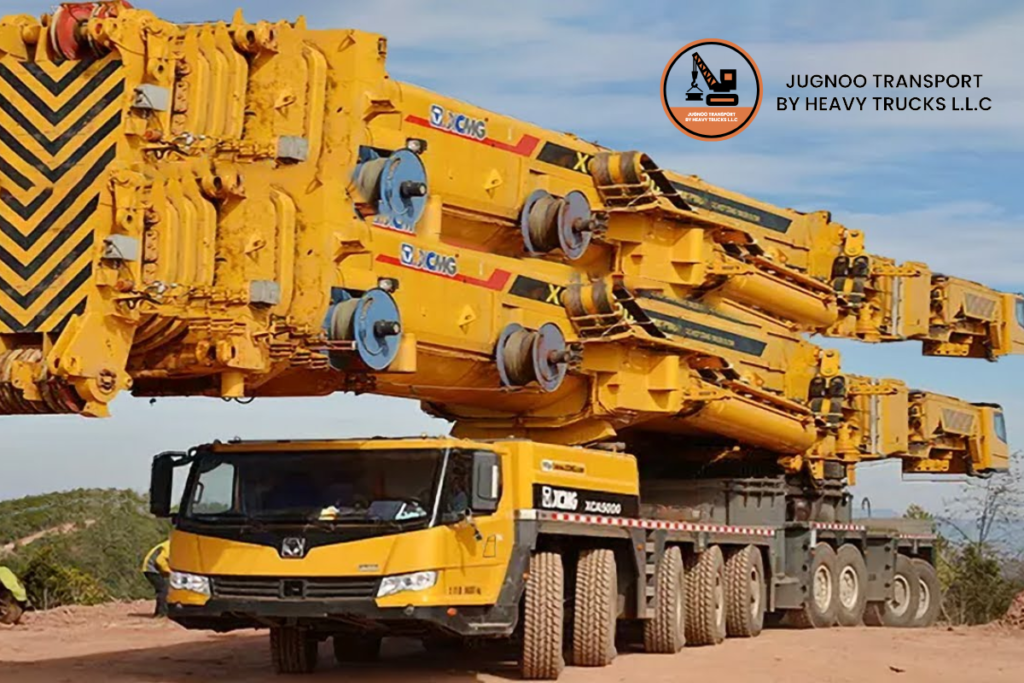
Rent or buy powerful Mobile Crane for lifting & construction. Versatile, hydraulic mobile crane solutions for your heavy-duty project needs.
Renting a mobile crane is a big decision. Whether you’re lifting HVAC units onto a roof, placing steel beams for a new building, or setting up heavy machinery in a factory, the right crane makes the job smooth, safe, and efficient. The wrong choice, however, can lead to delays, budget overruns, and serious safety hazards.
This guide is designed to take the mystery out of the process. We’ll walk you through everything you need to know—from understanding the different types of cranes like boom trucks and carry deck cranes, to selecting the perfect size, to choosing a rental company you can trust. Our goal is to empower you with knowledge, ensuring your next project is a resounding success. And while we’re proud of the services we offer at Jugnoo Transport, this post is first and foremost about giving you the unbiased, professional advice you need to make an informed decision.
Why Renting a Mobile Crane is a Smart Move
Before we dive into the specifics, let’s talk about why renting is often the best strategy. Purchasing a crane is a massive capital investment, with added costs for maintenance, insurance, storage, and transportation. Renting gives you access to the latest models with advanced safety features, without the long-term commitment. You pay for what you need, when you need it, and the rental company handles the logistics and upkeep. It’s a flexible, cost-effective solution for projects of all scales.
Understanding Mobile Crane Types – It’s Not One-Size-Fits-All
The term mobile crane covers a range of machinery. Choosing the correct type is the critical first step. The three most common categories you’ll encounter are Boom Trucks, Truck-Mounted Cranes, and All-Terrain Cranes. Let’s break them down.
- The Boom Truck: Your Versatile Workhorse
Think of a boom truck as the dependable utility player. It’s essentially a commercial truck (like a flatbed or a boom truck body) with a crane mounted directly onto its chassis. The key feature is that the crane and the truck are one integrated unit.
Best For:
- Light to medium-duty lifting (typically up to 30-40 tons).
- Urban and suburban projects with good road access.
- Delivery and placement of materials like lumber, steel, concrete blocks, and mechanical units.
- Jobs that require both transportation and lifting, as many have a useful cargo bed.
Advantages:
- Cost-Effective: Generally, the most affordable rental option.
- Maneuverable: Can navigate city streets and tighter job sites more easily than larger cranes.
- Quick Setup: Often requires less setup time; the driver is usually the certified operator.
- Dual-Purpose: Transports its own load.
Limitations:
- Less lifting capacity and reach compared to larger cranes.
- Not suitable for soft or extremely uneven ground without proper preparation.
- The Truck-Mounted Crane: Power and Reach on the Highway
Often confused with a boom truck, a truck-mounted crane is a heavier-duty machine. Here, a powerful crane is mounted onto a purpose-built carrier truck. The crane and the carrier are designed as a system, but the crane itself is a more substantial piece of equipment with a longer boom and greater capacity.
Best For:
- Medium to heavy lifting (capacities can range from 15 to over 100 tons).
- Projects requiring greater reach and height, like multi-story construction.
- Highway-transportable lifts; they can travel on public roads at speed to get between sites.
Advantages:
- Excellent Reach & Capacity: A significant step up in power from a standard boom truck.
- Mobility: Can move between sites under its own power quickly.
- Versatility: Many have telescopic booms and may include jibs for extra length.
Limitations:
- Requires a larger, more stable operating area.
- More expensive to rent and operate than a boom truck.
- The operator often requires a specialized commercial driver’s license (CDL).
- The Carry Deck Crane: The Nimble, Rotating Solution
This is a unique and highly maneuverable machine. A carry deck crane is a small, four-wheeled crane with a rotating boom that sits in the center of the machine. Its defining characteristic is a flat deck or carry deck surrounding the operator’s cab, which is used to transport loads around a job site.
Best For:
- Confined, indoor spaces like factories, warehouses, and power plants.
- Maintenance work where equipment needs to be moved and lifted in tight quarters.
- Repetitive, precision lifts in a controlled environment.
Advantages:
- Unmatched Maneuverability: A tight turning radius and small footprint.
- 360-Degree Rotation: The entire superstructure rotates, offering precise load placement.
- Self-Transporting: Can pick up a load, drive it across the site, and set it down.
Limitations:
- Very limited lift capacity (usually under 15 tons) and height.
- Not designed for travel on public roads; must be transported on a trailer.
Other Notable Types:
- All-Terrain Cranes: The ultimate off-road performers. They have multiple axles, all-wheel drive, and can handle rough, unprepared terrain. Ideal for large-scale infrastructure projects, energy, and mining.
- Rough-Terrain Cranes: Similar to all-terrain but designed specifically for off-road work, often with a single cab for both driving and operating. They are slower on roads but excel on muddy, rocky sites.
- Crawler Cranes: Mounted on tracks instead of wheels, they offer incredible stability and can work on very soft ground. However, they require disassembly and transport on multiple trucks.
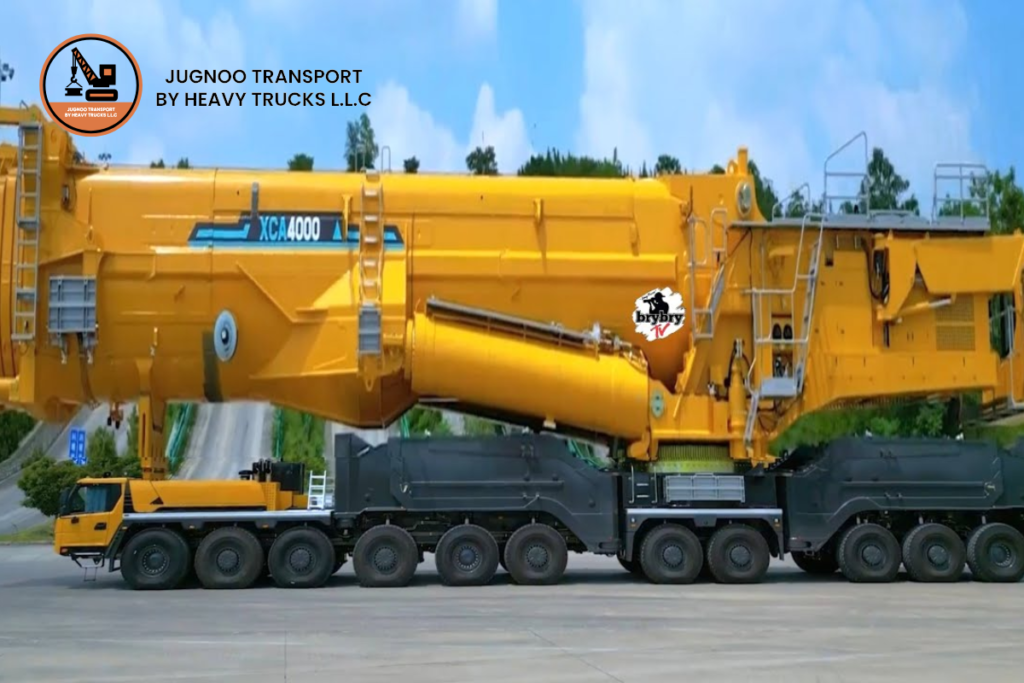
Choosing the Right Size and Capacity – The Golden Rules
Selecting the right crane isn’t just about type; it’s about precise capacity. This is where safety and planning intersect. Getting this wrong is not an option.
The Load Chart is Your Bible
Every crane has a load chart—a complex table provided by the manufacturer. This chart tells you exactly how much weight the crane can lift at a given radius (distance from the crane’s center), boom length, and configuration. Ignoring the Load Chart is one of the most dangerous and common mistakes in crane operation.
How to Use the Load Chart:
- Know Your Load Weight: This is not a guess. You must know the exact weight of the object you’re lifting, including all rigging (slings, shackles, spreader bars).
- Determine the Radius: Measure the horizontal distance from the crane’s center pin (the point it rotates around) to the center of the load.
- Know the Boom Length & Angle: The configuration of the crane’s boom dramatically affects capacity.
- Cross-Reference: Find the intersection of your radius and boom length/configuration on the chart. The listed capacity must EXCEED your total load weight.
Critical Concept: Rated Capacity vs. Actual Load. The load chart gives you a rated capacity. Your actual load must always be less. A responsible rental company, like Jugnoo Transport, will always review the load chart with you for your specific lift plan.
The Dangers of Overloading
Overloading the Boom is a direct path to catastrophe. When a crane is asked to lift more than it is rated for, the structural integrity is compromised. The boom can buckle or collapse, often without warning. This can cause:
- The load to drop, destroying property and endangering lives.
- The entire crane to tip over.
- Catastrophic failure of the boom or other components.
Never, ever ask an operator to exceed the chart’s limits. If your calculations show the crane is too small, you need a larger crane. It’s that simple.
Key Factors in Sizing Your Crane:
- Lift Weight: The fundamental starting point.
- Lift Radius: The further the load is from the crane, the less it can lift. Can you position the crane closer?
- Lift Height & Boom Clearance: You need enough boom length to reach the height, plus clearance for the rigging below the hook.
- Site Obstacles: Are there buildings, power lines, or other structures the boom must reach over or around? This may require a longer boom or a different crane position.
- Swing Clearance: Does the crane have 360 degrees to rotate, or are there obstacles? A restricted swing can impact capacity.
Pro Tip: When in doubt, consult with the crane rental company’s lift planning expert. A reputable firm will ask for your site details and load specifications to recommend the right machine. At Jugnoo Transport, our experts begin every rental conversation with these questions to ensure a perfect—and safe—fit.
Selecting the Right Rental Company – Your Partner in Success
The company you rent from is as important as the crane itself. You’re not just renting a machine; you’re buying into their expertise, safety culture, and support. Here’s what to look for.
- Safety Record and Certifications
This is non-negotiable. Ask about:
- OSHA Compliance: Do they adhere to all OSHA standards (or local equivalent)?
- Maintenance Logs: Is their equipment maintained on a strict, documented schedule? Well-maintained equipment is safe equipment.
- Insurance: Do they carry comprehensive liability and injury insurance? Ask for a certificate of insurance.
- Equipment Fleet and Condition
A good company has a modern, well-maintained fleet. When you call, they should ask detailed questions to match you with the right machine, not just push what’s available. Look for a company that invests in newer models with modern safety features.
- Transparency and Professionalism
From the first phone call, you should feel heard. Are they asking about your load, site conditions, and lift plan? Are their rates clear, with a detailed breakdown of costs (rental rate, operator fee, transport, fuel, etc.)? Hidden fees are a red flag.
- Local Knowledge and Reputation
A company with deep roots in your area understands local regulations, weather patterns, and common challenges. Check online reviews, ask for references from past clients in similar industries, and see how long they’ve been in business.
Why Jugnoo Transport Stands Out:
At Jugnoo Transport, we’ve built our reputation on the pillars of safety, reliability, and partnership. We don’t just drop off a boom truck and drive away. We provide a comprehensive service:
- Pre-Rental Consultation: Our experts work with you to plan the lift, select the ideal machine (be it a versatile truck-mounted crane for a highway project or a nimble carry deck crane for a plant shutdown), and ensure all safety protocols are in place.
- Certified Professionals: Every operator we provide is highly trained and certified, acting as an on-site resource for your team.
- Impeccable Maintenance: Our fleet is maintained to the highest standard, giving you peace of mind that the equipment won’t let you down.
- Commitment to Education: We believe in empowering our clients with knowledge, much like this guide aims to do.
Critical Safety Considerations You Must Address
Safety is a shared responsibility. Even with the perfect crane and the best rental company, on-site conditions are paramount. Here are the non-negotiable safety topics.
- Operating on Unstable Ground
This is a leading cause of crane accidents. A crane must be set up on firm, level, and compacted ground. The immense pressure under the outrigger pads or tracks is tremendous.
- Always Use Outrigger Pads: Never set outriggers directly on asphalt or concrete without large, approved pads to distribute the load. The ground underneath can fail.
- Get a Soil Analysis: For large lifts or questionable ground conditions, a professional soil analysis may be required.
- Watch for Underground Hazards: Know what’s below—culverts, septic tanks, utility lines, or old foundations can collapse.
- Plan for Weather: Ground conditions change with rain. A stable field on Monday can be a swamp on Friday.
- Managing Poor Visibility and Blind Spots
Crane operators cannot see everything. Poor Visibility and Blind Spots are constant challenges that must be managed.
- Use a Signal Person (Rigger): A certified signal person is essential for most lifts. They are the operator’s eyes on the load and the surrounding area, using standard hand signals or radios.
- Clear Communication: Establish clear radio protocols and emergency stop signals before the lift begins.
- Technology Aids: Modern cranes may have cameras, but they do not replace a vigilant signal person and a clear lift plan.
- Barricade the Swing Radius: The area around the crane where the boom and load swing must be clearly marked and off-limits to unauthorized personnel.
- The Non-Negotiables: A Safety Checklist
- Lift Plan: Have a written, reviewed plan for every critical lift.
- Pre-Lift Meeting: Gather the operator, signal person, site supervisor, and anyone near the lift area to review the plan, signals, and emergency procedures.
- Weather Awareness: Wind is a crane’s enemy. Know the maximum wind speed for the crane and your load (a large, flat load acts like a sail). Establish a wind-speed monitor and a stop-work procedure.
- Power Line Safety: Assume all power lines are energized. Maintain a minimum 20-foot clearance (more for high voltage) as per OSHA. Use a dedicated spotter for power line awareness.
- Rigging Inspection: Inspect all slings, shackles, and hardware for wear, damage, or deformation before every use.
The Rental Process – From Inquiry to Job Completion
Let’s walk through what a typical, professional rental process looks like.
- Initial Inquiry: You call or email with your project details (what, where, when).
- Consultation & Planning: A representative asks detailed questions and may request site photos or diagrams. They recommend a crane type and size.
- Quote & Agreement: You receive a transparent quote. Once accepted, a rental agreement is signed.
- Site Preparation: You prepare the site (clear access, level ground, mark utilities). The rental company may do a site visit.
- Delivery & Setup: The crane is delivered. The operator conducts a pre-operation inspection and sets up the crane according to the plan.
- Pre-Lift Meeting: The on-site team holds a safety meeting.
- The Lift: The operation is conducted safely and efficiently.
- Demobilization: The crane is packed down and transported off-site.
- Invoice & Follow-up: You receive a final invoice and the rental company may follow up for feedback.
Conclusion: Empowering Your Next Lift
Renting a mobile crane is a significant task, but it doesn’t have to be daunting. By understanding the different types of cranes—from the versatile boom truck to the powerful truck-mounted crane to the agile carry deck crane—you can start with the right category. Respecting the load chart and never overloading the boom, you ensure a foundation of safety. Preparing your site and avoiding operating on unstable ground, you mitigate major risks. And by managing poor visibility and blind spots with a certified team, you complete the circle of safe operation.
Ultimately, your choice of rental company is your most important decision. Choose a partner that prioritizes your safety and success, a company that brings expertise and reliability to your job site.
At Jugnoo Transport, we are that partner. We provide more than just equipment; we provide solutions, peace of mind, and a commitment to excellence that has defined our service for years. When you’re planning your next project, consider this guide your handbook, and consider us your trusted resource. Let’s build something great, and more importantly, let’s build it safely.
Ready to plan your lift? Contact the experts at Jugnoo Transport today for a consultation. We’re here to help you lift with confidence.