
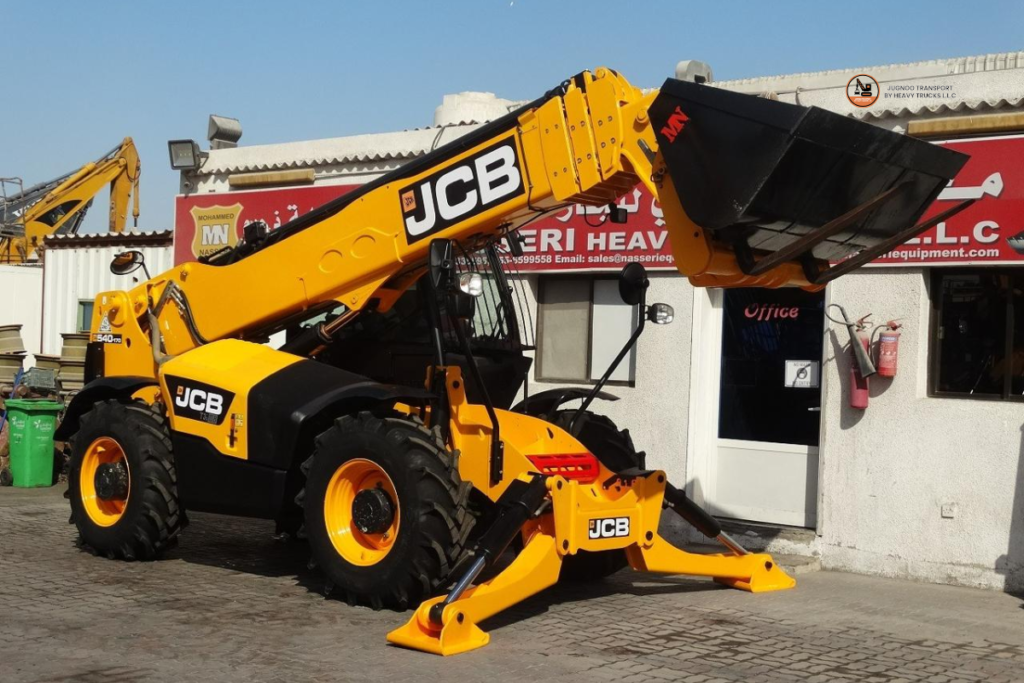
Telehandler boom loader is a powerful machine used for lifting, loading, and moving heavy materials on construction and industrial sites efficiently and safely.
If you have spent any time around a construction site, a farm, or a large industrial warehouse, you have likely seen a machine that looks like a cross between a forklift and a crane. This machine, with its long extending arm or boom, is called a telehandler loader (short for telescopic handler).
These machines are the superheroes of the material handling world. They lift, they place, they dig, and they move materials across rough terrain with ease. Whether you are building a skyscraper, stacking hay bales, or moving pallets of bricks, the telehandler for construction has become an essential piece of equipment.
At Jugnoo Transport, we specialize in moving heavy equipment just like this. We understand that getting your machinery to the job site safely and on time is the first step to getting the job done. In this post, we will explore the many uses, key features, and undeniable benefits of the telehandler, as well as discuss some critical safety points every operator should know.
What Exactly is a Telehandler Loader?
Let’s start with the basics. A telehandler loader is a versatile machine that combines the lifting power of a forklift with the reach of a small crane . The tele part of its name comes from the word telescopic, which refers to its boom. This boom can extend forward and upward, allowing it to go where traditional forklifts cannot.
Imagine trying to lift a bundle of roofing materials to the top of a two-story house. A standard forklift cannot reach that high. A crane might be too big and expensive to bring in for a small job. A telehandler fits perfectly in the middle. It can drive up to the house, extend its boom, and place the load exactly where it needs to go.
These machines are usually mounted on four large wheels designed to handle mud, gravel, and uneven ground, which is why they are a staple in the construction and agricultural worlds.
The Many Uses of a Telehandler on the Job Site
The primary reason for the telehandler’s popularity is its incredible versatility. It is not a one-trick pony; it is a multi-tool on wheels. Depending on the attachment fitted to the end of the boom, it can perform a wide variety of tasks.
1. Construction and Lifting
This is the most common use. When you think of a telehandler for construction, think of lifting. Workers use them to:
- Raise Materials: Lifting pallets of blocks, lumber, or roofing supplies to upper floors of a building under construction .
- Placement: Positioning steel beams or trusses with precision.
- Loading and Unloading: Taking delivery of heavy supplies from trucks and moving them to storage areas on site .
2. Agricultural Work
Farms have fallen in love with telehandlers. They are often more efficient than traditional tractors because of their reach . On a farm, you might see a heavy duty telehandler:
- Handling Bales: Moving large, round hay bales and stacking them high in a barn to save space.
- Feeding Livestock: Using a bucket to scoop feed and dump it into high-sided mixers or troughs .
- Bedding Stalls: Lifting and placing bedding material into animal stalls without having to enter the stall itself, which improves safety and efficiency .
3. Industrial and Warehouse Applications
Inside large warehouses or recycling centers, telehandlers are invaluable . They can:
- Stack Inventory: Placing heavy goods on high shelves in a warehouse.
- Material Handling in Recycling: Sorting and moving large piles of scrap metal or waste materials.
- Loading Containers: Reaching into shipping containers to pack or unpack them fully, something a standard forklift struggles with due to its lack of reach .
4. Specialized Tasks with Attachments
The magic of the telehandler lies in its ability to switch tools. In minutes, you can turn your lifting machine into a digging machine or a cleaning machine. Common attachments include:
- Buckets: For digging dirt, moving gravel, or cleaning up debris.
- Winches and Jibs: For pulling heavy loads or lifting unusually shaped items .
- Work Platforms: Sometimes, telehandlers are used to lift workers (in a certified basket) to high places to change lightbulbs or do repairs, acting as a temporary aerial work platform .
Key Features That Make Telehandlers Stand Out
Not all telehandlers are created equal, but they share a core set of features that make them so effective. Understanding these features helps you choose the right machine for the job and appreciate the engineering behind them.
The Telescopic Boom
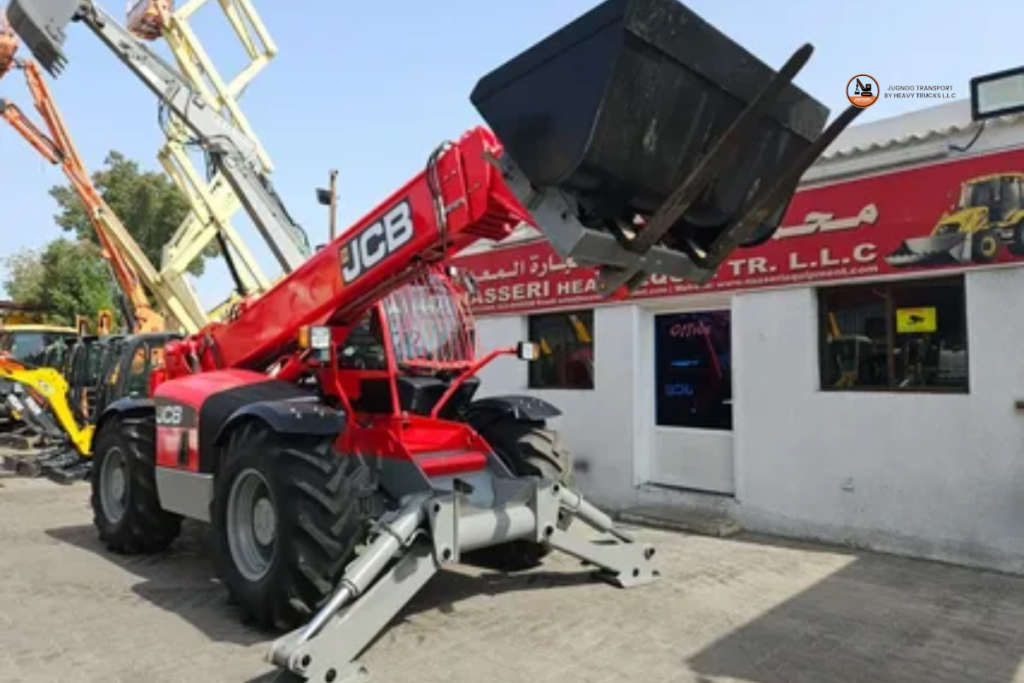
The defining feature is the boom. It is made up of multiple sections that slide inside one another, like a collapsible radio antenna. This design allows the machine to have a long reach when extended but remain compact when driving . Modern booms, like those on new Liebherr models, are designed to offer greater lift heights and forward reach, allowing operators to load containers or dump into hoppers without driving deep into dangerous piles .
Lift Capacity and Height
When we talk about a heavy duty telehandler, we are usually referring to its size. Models vary widely. You can find compact machines that lift about 2.6 tonnes, perfect for small jobs in tight spaces . On the other end of the spectrum, massive heavy duty telehandler units can lift 4 tonnes or more up to heights of 19 meters . For example, the new Magni TH 4.19 can lift 4,000 kg to a height of 19 meters, showing just how powerful these machines have become .
Steering Modes
This is a feature that surprises many people new to telehandlers. Because they need to work in tight spaces, telehandlers often offer multiple steering modes:
- Front-Wheel Steering: For normal driving at higher speeds.
- Four-Wheel Steering: For making tight turns, reducing the turning circle.
- Crab Steering: This is a unique mode where all four wheels turn in the same direction. This allows the machine to move diagonally, which is perfect for positioning the machine sideways against a wall or working in tight, confined spaces .
Operator Comfort and Visibility
Manufacturers have realized that a comfortable operator is a productive operator. Modern cabs are designed with ergonomics in mind. They feature air-ride seats, intuitive joystick controls, and advanced climate control . More importantly, visibility is a huge focus. Large windows and slim boom designs give the operator a better view of the load and the surroundings .
The Benefits of Adding a Telehandler to Your Fleet
For businesses like those we serve at Jugnoo Transport, investing in the right machinery pays dividends. Here is why a telehandler is such a smart investment.
1. Versatility Saves Money
The biggest benefit is that one machine can do the work of many. Instead of owning a forklift, a small crane, and a wheel loader, you can own one telehandler and swap out the attachments . This reduces the initial capital investment, lowers maintenance costs (since you are only servicing one engine), and requires less storage space.
2. Increased Efficiency and Reach
Time is money on a job site. A telehandler for construction speeds up workflows dramatically. Because it can reach up and over obstacles, you do not have to spend time building ramps or repositioning the machine constantly . You can unload a truck and place materials directly where they are needed in one smooth motion. In farming, this efficiency saves precious minutes every day, which adds up to hours saved over a season .
3. Maneuverability on Rough Terrain
Job sites are not smooth concrete floors. They are muddy, rocky, and uneven. Telehandlers are built for this. Their large tires and powerful drivetrains allow them to navigate these conditions safely. Models with high ground clearance can get in and out of areas where other machines would get stuck .
4. Improved Safety
When used correctly, a telehandler makes a site safer. By using attachments, workers can handle heavy or hazardous materials from a safe distance. For example, instead of manually lifting heavy roof tiles via a ladder, a telehandler can lift them safely to the roofer. However, it is important to remember that safety depends entirely on the operator.
Safety First: Avoiding Common Hazards
While telehandlers are incredibly useful, they are also powerful machines that demand respect. Every year, accidents happen that could have been avoided with proper training and caution. At Jugnoo Transport, we care about the safe delivery and operation of your equipment, so we want to highlight some critical safety points from industry experts .
Here are four of the most common—and most dangerous—mistakes made on job sites.
Overloading the Boom
This is perhaps the most critical rule to break. Every telehandler has limits, and these are clearly shown on the load chart located in the cab. This chart tells the operator how much weight the machine can safely lift at different boom angles and extensions.
Overloading the Boom occurs when an operator tries to lift a load that is too heavy for the current configuration. Because the force on the machine multiplies as the boom extends, a load that is safe close to the machine can cause a disaster when lifted at full reach. Overloading the Boom can cause the machine to tip forward or cause structural damage to the boom itself . The results can be fatal. In one tragic case, a defective safe load indicator and an untrained driver led to a telehandler tipping over, resulting in a serious injury where a man lost both legs .
How to avoid it: Ignoring the Load Chart is never an option. Operators must be trained to read and understand the load chart. They must also ensure that the machine’s safety systems, like the Safe Working Load Indicator, are functioning properly before starting work .
Ignoring the Load Chart
Building on the last point, Ignoring the Load Chart is a willful decision that leads to disaster. The load chart is not a suggestion; it is the machine’s law. Some operators might think they can “get away with it” just this once, but physics is unforgiving. The chart accounts for the stability of the machine and its hydraulic limits. Disregarding it puts everyone on the site at risk. Always check the chart, and if the information is worn away or missing, do not use the machine until it is replaced .
Operating on Unstable Ground
A telehandler is at its most stable when it is on firm, level ground. However, job sites are rarely perfect. Operating on Unstable Ground—such as soft mud, steep slopes, or freshly filled ditches—is incredibly dangerous . If the ground gives way under a tire, the machine can tip over instantly. Even on a slope, the center of gravity shifts, making the machine much more likely to roll.
How to avoid it: Always conduct a site inspection before operating. Look for soft spots, hidden voids, or excessive slopes . If the ground is soft, using mats or cribbing to spread the weight can help. When traveling on uneven ground, keep the boom low and the load close to the ground to maintain a low center of gravity.
Poor Visibility and Blind Spots
Because of their size and the nature of the boom, telehandlers have significant blind spots. The operator’s view can be blocked by the boom arm, the engine compartment, or the load itself. Poor Visibility and Blind Spots are a leading cause of accidents, especially when reversing or working in congested areas . Pedestrians on foot are particularly vulnerable.
How to avoid it: Operators should use all available tools, including mirrors, reverse cameras, and sensors . If the view is obstructed, they must use a trained signaller (spotter) to guide them. It is also the responsibility of site managers to separate pedestrians from vehicle traffic as much as possible using barriers and designated walkways .
How Jugnoo Transport Fits Into Your Project
At Jugnoo Transport, we know that owning a heavy duty telehandler is a significant investment. Whether you are a contractor who just purchased a new Magni or Liebherr, or a farmer relying on your JLG for daily chores, you know that keeping that machine running is essential to your livelihood.
But how does that expensive piece of equipment get from the dealership to your job site? How do you move it between multiple project locations? That is where we come in.
Getting a heavy machine like a telehandler for construction from point A to point B is not as simple as driving it down the highway. These machines are not built for high-speed, long-distance travel. Doing so would wear out the tires, damage the suspension, and violate traffic laws. That is why professional heavy haulage is required.
Jugnoo Transport offers reliable, safe, and efficient transport solutions for all types of heavy equipment, including telehandlers of every size. Here is why you should choose us for your logistics needs:
- Expertise in Heavy Haulage: We understand the weight distribution, securing requirements, and permit needs for moving oversized loads.
- Timely Delivery: We know that downtime costs you money. We pride ourselves on getting your telehandler loader to the site on schedule so your crew can start working immediately.
- Safety Compliance: Just as you follow safety protocols on site, we follow strict safety protocols on the road. Your machine is secured with high-quality chains and binders, and our trailers are maintained to the highest standards.
- Nationwide Service: No matter where your next project is located, Jugnoo Transport can get your equipment there.
By handling the logistics of transportation, we allow you to focus on what you do best: operating your machinery and completing projects efficiently.
Choosing the Right Telehandler for the Job
If you are in the market for a telehandler, or if you are renting one for a specific project, knowing the right size is crucial. Here is a simple guide:
- Compact Telehandlers: These usually have a lift capacity of around 2.5 to 3 tons and a lift height of up to 7 meters. They are perfect for residential construction, small farms, and working indoors or in spaces with low ceilings .
- Medium Telehandlers: With capacities around 4 tons and heights up to 19 meters, these are the workhorses of commercial construction sites. They offer the best balance of power and maneuverability .
- Heavy Duty Telehandlers: These are the giants, designed for massive industrial projects or mining. They can handle extremely heavy loads and reach incredible heights, often featuring reinforced booms and heavy-duty frames .
When choosing, consider the heaviest load you will lift and the highest point you need to reach. Remember, due to the physics of the boom, the higher you lift, the less weight you can carry. Always consult the load charts for the specific model you are using.
Conclusion
The telehandler loader has revolutionized the way we work in construction, agriculture, and industry. Its unique ability to lift, place, and move materials across rough terrain makes it an indispensable tool. From the benefits of its versatile attachments to the power of a heavy duty telehandler lifting tons of steel, these machines are built to make our lives easier and our work more efficient.
However, with great power comes great responsibility. We have discussed the critical dangers of Overloading the Boom, Ignoring the Load Chart, Operating on Unstable Ground, and navigating Poor Visibility and Blind Spots. These hazards are real, but they are entirely preventable with proper training, respect for the equipment, and a commitment to safety.
At Jugnoo Transport, we respect the power of these machines. We know that getting them safely from one location to another is the first critical step in any project. Whether you need a small telehandler for a landscaping job or a massive unit for a high-rise development, we are here to help.Contact Jugnoo Transport today for a quote on your next equipment move. Let us handle the road so you can handle the job.